






Here’s a list of the top 10 talent management systems based on features, scalability, integrations, and user reviews:
- SAP - Enterprise platform with strong HR analytics, workforce planning, & global compliance.
- Workday - Unified HR and finance platform with real-time analytics and AI insights.
- Oracle - AI-powered HCM with recruitment, succession planning, & global scalability.
- UKG Pro - Robust HCM suite with workforce planning, engagement, and payroll integration.
- BambooHR - User-friendly HR software with onboarding & performance tracking.
- Zoho People - Affordable, customizable platform with LMS and performance management.
- ADP Workforce Now - Comprehensive HCM with payroll, compliance, and data-driven insights.
- Paylocity - SMB-focused HCM with payroll, talent management, and workforce analytics.
- Paycor - SMB-focused solution with payroll, talent development, and analytics.
- ClearCompany - All-in-one solution with ATS, onboarding, performance, and engagement.
Each talent management system offers distinct strengths; choose based on your company size, workforce complexity, and HR needs.
A good talent management system can boost the profits of your business by 21% by increasing employee engagement. Furthermore, modern talent management software companies use AI to streamline hiring and leadership planning.
We have reviewed the top solutions to assist you in selecting the best fit. These systems can transform your approach to attracting and retaining talent by providing tools for employee engagement, performance tracking, etc.
This blog covers the 15 best talent management software and 10 free talent management tools, with their features, integrations, pros, and cons. In addition, we will discuss the benefits of TMS, future trends in talent management software, and more.
Quick Comparison: Top 15 Talent Management Systems in 2026
Detailed Reviews: 15 Best Talent Management Software
We did extensive research and reviewed many tools to find out the top 15 talent management tools. Here is a detailed description of them that will help you choose the right TMS for your business:
1. SAP SuccessFactors
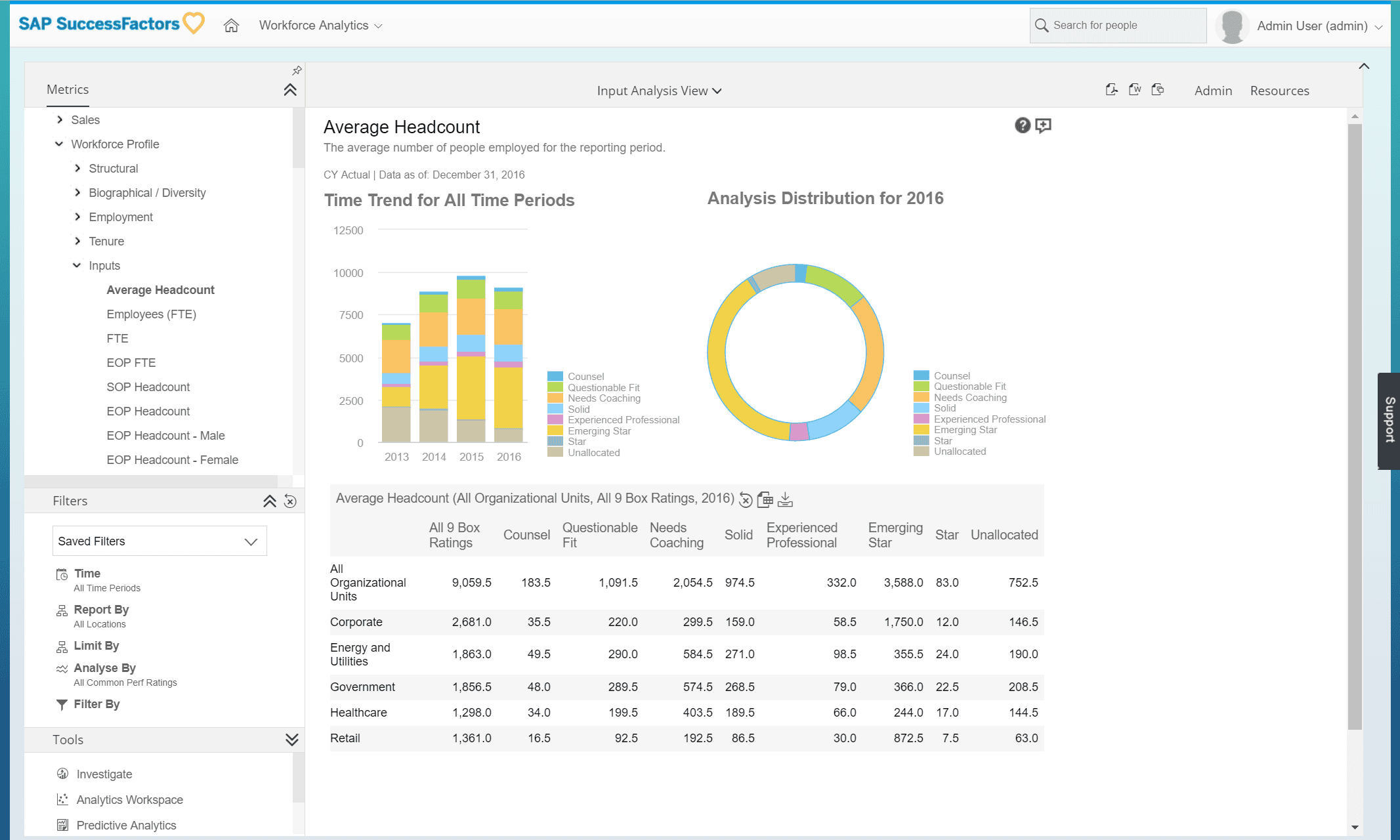
SAP SuccessFactors was founded in 2001 and purchased by SAP in 2011, and its headquarters are located in South San Francisco, California. It is a human capital management software (HCM) and one of the best talent management systems.
SAP SuccessFactors helps to manage recruitment, training, performance, and employee growth all from one platform. Furthermore, SAP SuccessFactors integrates with other SAP solutions such as S/4HANA, SAP ERP, and SAP Analytics Cloud, as well as various third-party applications.
Key Features of SAP:
Here are the key features of SAP SuccessFactors:
- Recruiting
- Onboarding
- Performance and Goals Management
- Talent Management
- HR Analytics
- Workforce Planning
- Learning and Development
- Sales Performance Management
- Employee Self Service
- Compensation Management
Pros of SAP:
According to the customer reviews, these are the advantages of using SAP SuccessFactors:
- Robust Recruitment Process: It simplifies recruitment and onboarding with easy tools for tracking candidates. It provides a dashboard for the hiring process, connects recruiters with talent quickly.
- Comprehensive Talent Analytics: Reviews state that the platform provides analytics for HR teams to make informed decisions using reports and dashboards to show employee performance.
- Seamless Integration with Other Systems: This talent management software integrates seamlessly with various systems, reducing gaps in information and manual tasks while increasing HR efficiency.
Cons of SAP:
As per the feedback given by the users, following are the cons of using SAP SuccessFactors:
- Complex Configuration Process: Due to the numerous customization options, setting up SAP SuccessFactors can be difficult. Initial configuration takes time and requires expert assistance, which can delay adoption.
- Higher Implementation Costs for Small Businesses: The comprehensive features have a high price tag, which may be challenging for smaller organizations. Small businesses might find the investment greater than simpler systems.
Expert Take:
SAP SuccessFactors is best suited for medium-to-large global enterprises that require workforce planning, compliance, analytics, learning, and succession management in one platform. It isn’t ideal for small businesses due to implementation complexity, extended deployment periods, and higher overall costs.
2. Workday
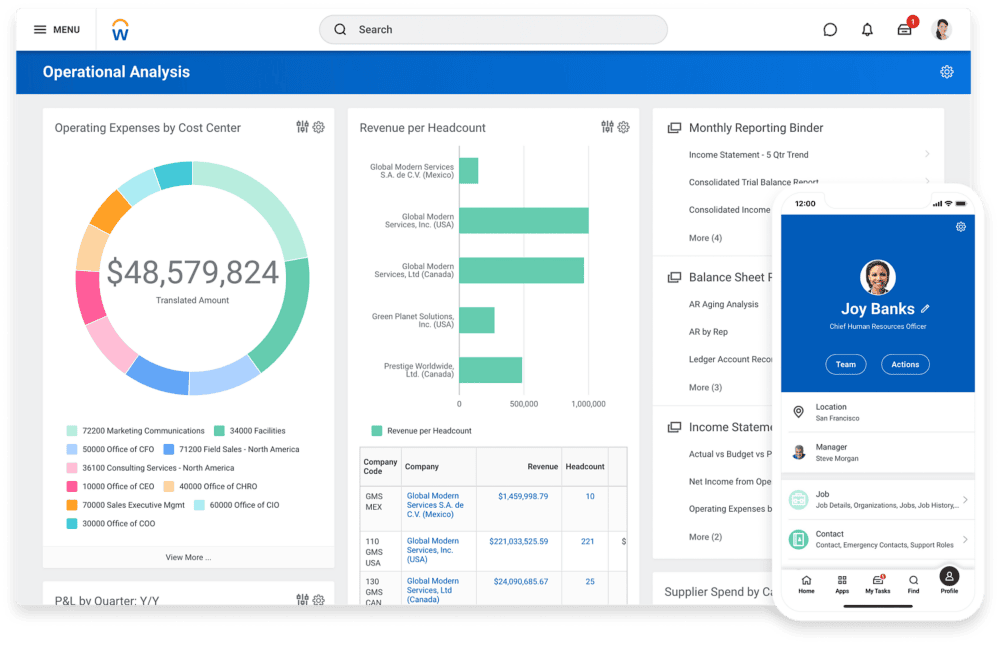
Workday, was launched in 2005 and headquartered in Pleasanton, California. It has become a leading enterprise human capital management (HCM) solution, changing how businesses handle human capital and finance.
It offers a cloud-based platform with AI technology that connects HR and financial data with over 800 million databases. Workday offers integrations with popular platforms such as Adobe, ADP compliance solutions, Asure software, etc.
Key Features of Workday:
These are the key features of using Workday:
- Talent Acquisition and Recruiting
- Financial Management
- Financial Planning
- Analytics and Reporting
- Local and Global Payroll
- Human Resource Management
- Learning and Development
- Workforce Planning
- Vendor Management System
- Employee Experience and Voice
- Talent Management
- AI Functionality
Pros of Workday:
According to the number of customer reviews, these are the top benefits of using Workday as a talent management system (TMS):
- Unified Talent Management Suite: Workday provides a complete talent management suite that integrates recruiting, performance, and learning modules.
- Strong Cloud Infrastructure: Workday is built on a secure cloud platform that supports scalability, regular updates, and robust data management. It offers adaptable solutions for businesses of all sizes, boosting performance and reliability.
- User-Friendly Interface: Workday’s intuitive design aids employees in navigating modules easily, reducing training time and enhancing the overall experience.
Cons of Workday:
As per the number of customer reviews, the following are the following drawbacks of Workday:
- Complex Implementation Process: Users say that implementing Workday takes time because of its many features. It requires careful planning and resources. Some businesses also state that they might require outside help for proper setup.
- Limited Customization Flexibility: Workday has strong features, but it allows limited customization. Companies may struggle to meet specific needs.
Expert Take:
Workday is ideal for organizations that have surpassed basic HR systems and desire a unified HCM and finance platform. It is especially useful for enterprises with complex reporting and workforce planning needs. However, smaller companies may struggle with its high implementation costs and administrative demands.
3. Oracle HCM Cloud
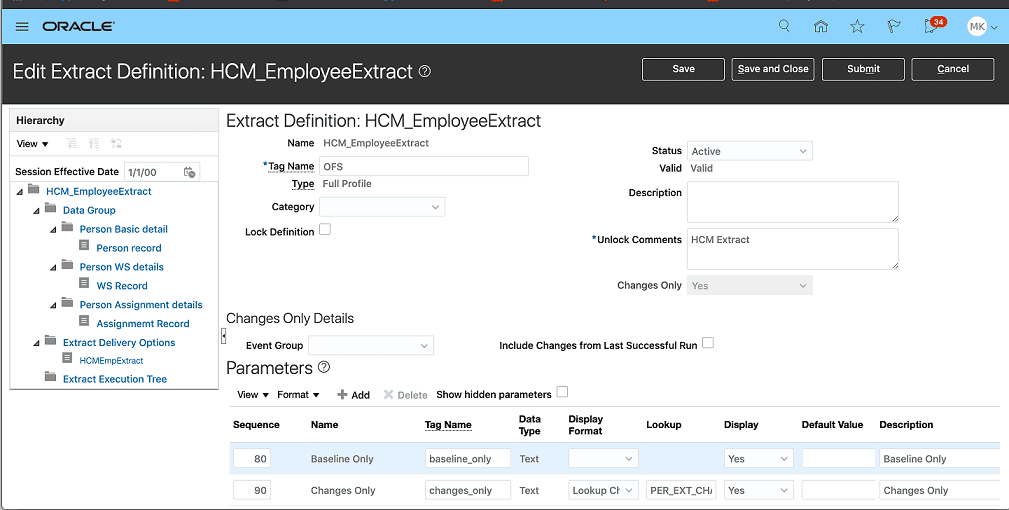
Oracle Cloud HCM, which was founded in 2011, aims to transform talent management using artificial intelligence. It provides a complete suite including core HR, recruitment, onboarding, performance management, and more.
Oracle Cloud HCM has built-in integrations with other Oracle Cloud services, including ERP and CX. Additionally, it provides third-party integrations with platforms like Salesforce, SAP, ServiceNow, Shopify, Snowflake, and Workday.
Key Features of Oracle:
The key features of using Oracle Cloud HCM are as follows:
- AI-Based Talent Management
- Human Capital Management (HCM)
- Recruitment & Onboarding
- Performance Management
- Payroll
- HCM Analytics
- Career Development
- Enterprise Resource Planning
- Oracle HR
- Employee Experience Management
- Global HR Solutions
Pros of Oracle:
Based on user feedback, these are the benefits of using the Oracle HR talent management software:
- Comprehensive Talent Management: Oracle HCM Cloud manages talent from recruitment to succession planning. It integrates HR functions into a single system for efficiency.
- Scalable TMS Solution: According to users, Oracle HCM Cloud is flexible and scalable. It adapts to various business sizes and needs, effectively supporting evolving HR requirements.
- Strong Global Compliance Capabilities: Oracle HCM Cloud complies with a variety of regulatory standards, supports multiple languages, and assists multinational organizations in meeting local human resource requirements.
Cons of Oracle:
These are the drawbacks of using Oracle HCM Cloud as per the user’s reviews:
- Slow Customer Support Response: Many users find customer support response times slow. This slow response time causes frustration and impacts business operations and satisfaction.
- Integration Challenges: Some organizations struggle to integrate Oracle HCM Cloud with other systems. Further, due to this data syncing can be complex, needing extra support and planning.
Expert Take:
Oracle HCM Cloud is best suited for large enterprises and regulated industries that require advanced talent management and AI insights. Its strengths lie in scalability, governance, and managing a global workforce efficiently. However, smaller organizations might see it as too complex and high-priced.
4. UKG Pro
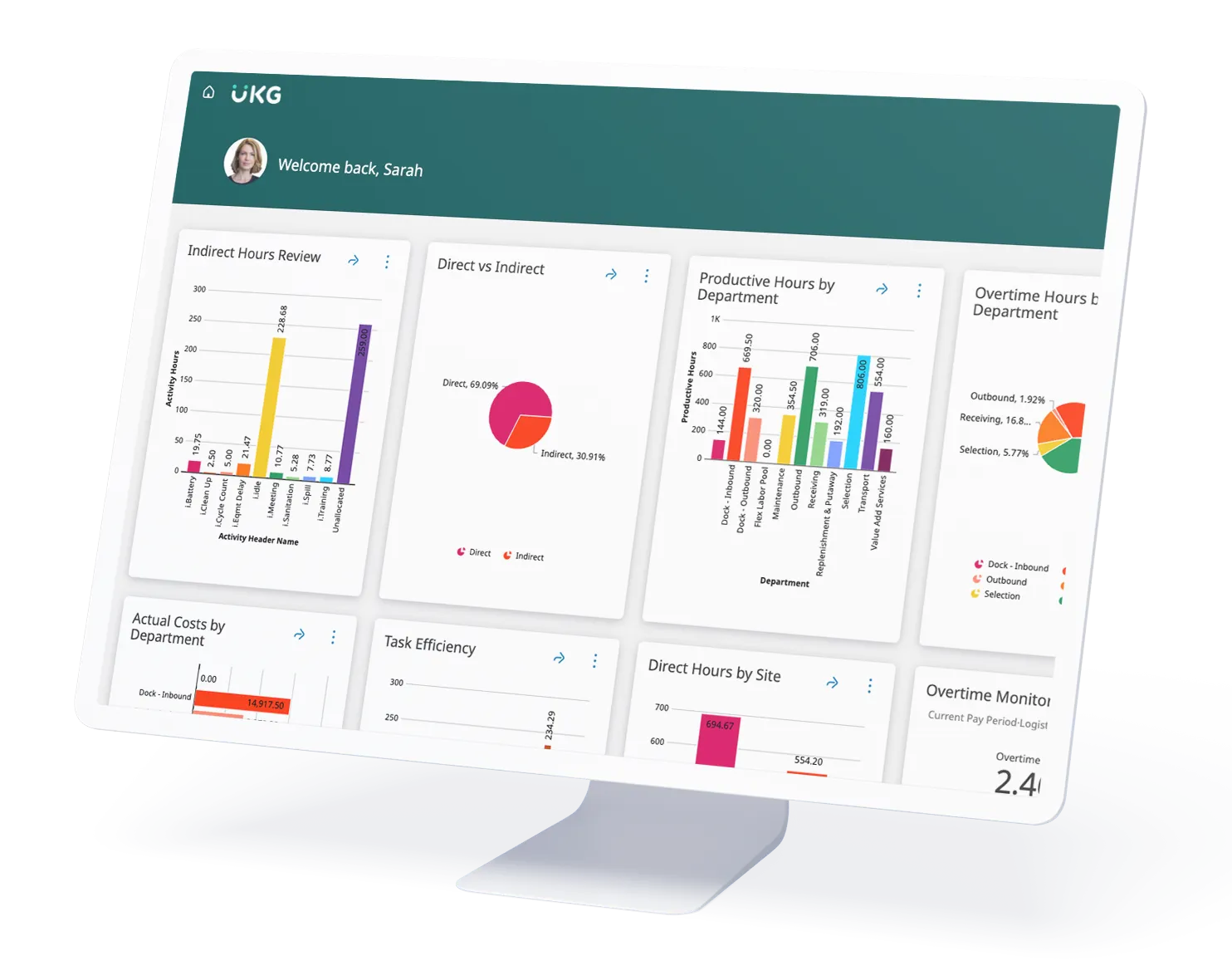
Founded in 1977, UKG (Ultimate Kronos Group) is based in Weston, Florida, and Lowell, Massachusetts. UKG Pro is a complete Human Capital Management solution that offers talent management tools to enhance employee engagement and automate HR tasks.
It offers a unified platform to manage HR, compensation, workforce management, etc all together. UKG Pro offers seamless integration with platforms such as Microsoft Office 365, Okta, Salesforce, ServiceNow, BambooHR, etc.
Key Features of UKG Pro:
The key features of UKG Pro:
- Time and Attendance
- Payroll
- Talent Management
- Employee Experience
- Multi-Country Payroll
- Talent Management
- Compliance
- Reporting and Analytics
- Learning Management
- Compensation Management
Pros of UKG Pro:
Following are the benefits of UKG Pro as per the customer’s feedback:
- Advanced Talent Management: UKG Pro offers advanced features like succession planning and career management that facilitate strategic workforce planning.
- Easy-to-Use Interface: The system is intuitive in design, enabling access for users of varying technical expertise levels.
- Comprehensive Payroll Integration: The UKG Pro payroll module is adjustable and handles complex payroll situations effectively.
Cons of UKG Pro:
According to the customer’s feedback, these are the cons of using UKG Pro:
- Long Implementation Period: Implementing UKG Pro can take some time, including precise planning and resources.
- Customization Limitations: While there is a range of features, users complain that UKG Pro's ability for customization is not what they need.
Expert Take:
UKG Pro is ideal for mid-market and enterprise organizations that want workforce management, payroll, engagement, and talent development in one platform. However, smaller companies might find implementation more challenging than simpler HR solutions.
5. BambooHR
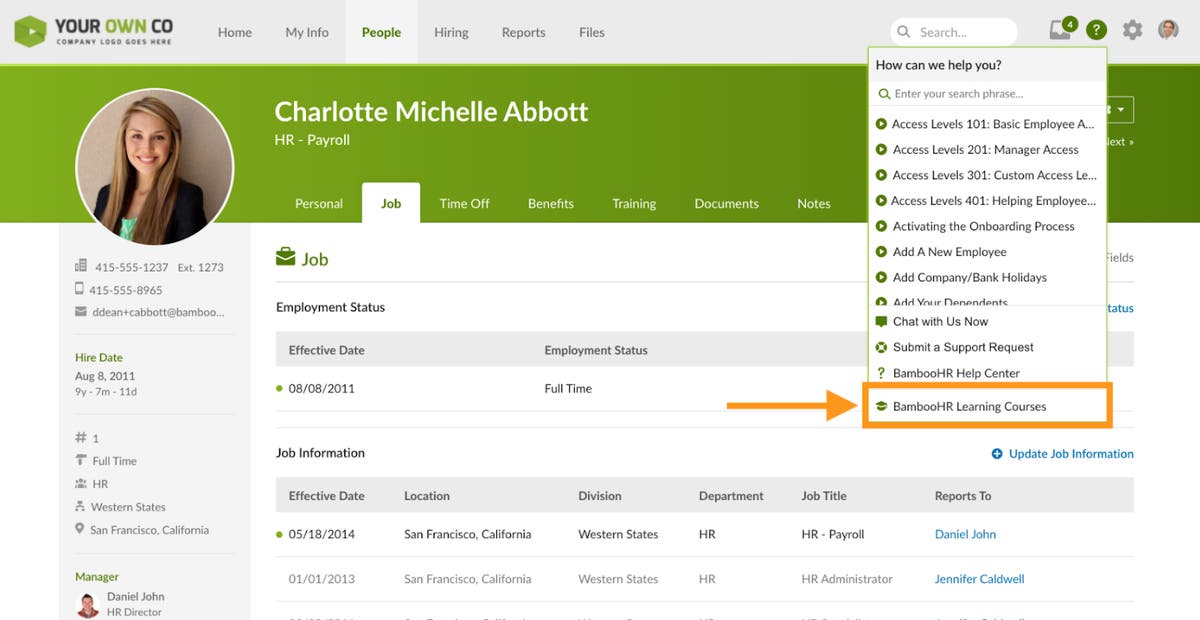
BambooHR is an AI HR recruitment software founded in 2008, in Lindon, Utah. It includes a complete set of tools for reporting, onboarding, and hiring. It offers an application tracking system (ATS) that manages the hiring process to onboarding new employees.
Moreover, BambooHR also offers database management that helps you to organize and secure information related to the employees. It integrates with third-party applications like Greenhouse, Checker, Faceup, and more.
Key Features of BambooHR:
These are the features of BambooHR:
- Hiring and onboarding
- Complete HR software
- Employee Experience
- Performance Management
- Payroll and Time tracking
- Applicant Tracking System
- Employee Database
- Support and Training
- E-Signature
- Candidate Management
- Interview Scheduling
- Customizable Workflows
- Employee Community
Pros of BambooHR:
Based on the number of customer reviews, these are the pros of BambooHR:
- Comprehensive Onboarding Tools: BambooHR provides strong onboarding features like customizable packets and electronic signatures.
- Centralized Employee Data Management: The platform centralizes employee information for efficient management.
- User-Friendly Interface: BambooHR is appreciated for its user-friendly interface for both HR and employees.
Cons of BambooHR:
Based on user feedback, these are the drawbacks of BambooHR:
- Limited Benefits Administration Features: BambooHR has the essential HR functions, but its benefits administration is less comprehensive than others.
- Higher Cost for Advanced Features: Some users say they must pay higher-tier pricing plans for advanced features. This however has affected their budget.
Expert Take:
BambooHR is perfect for small to medium-sized businesses that want an intuitive HR platform for onboarding, performance management, and employee records. However, it's not ideal for enterprises that require advanced succession planning, global compliance, or workforce analytics.
6. Zoho People
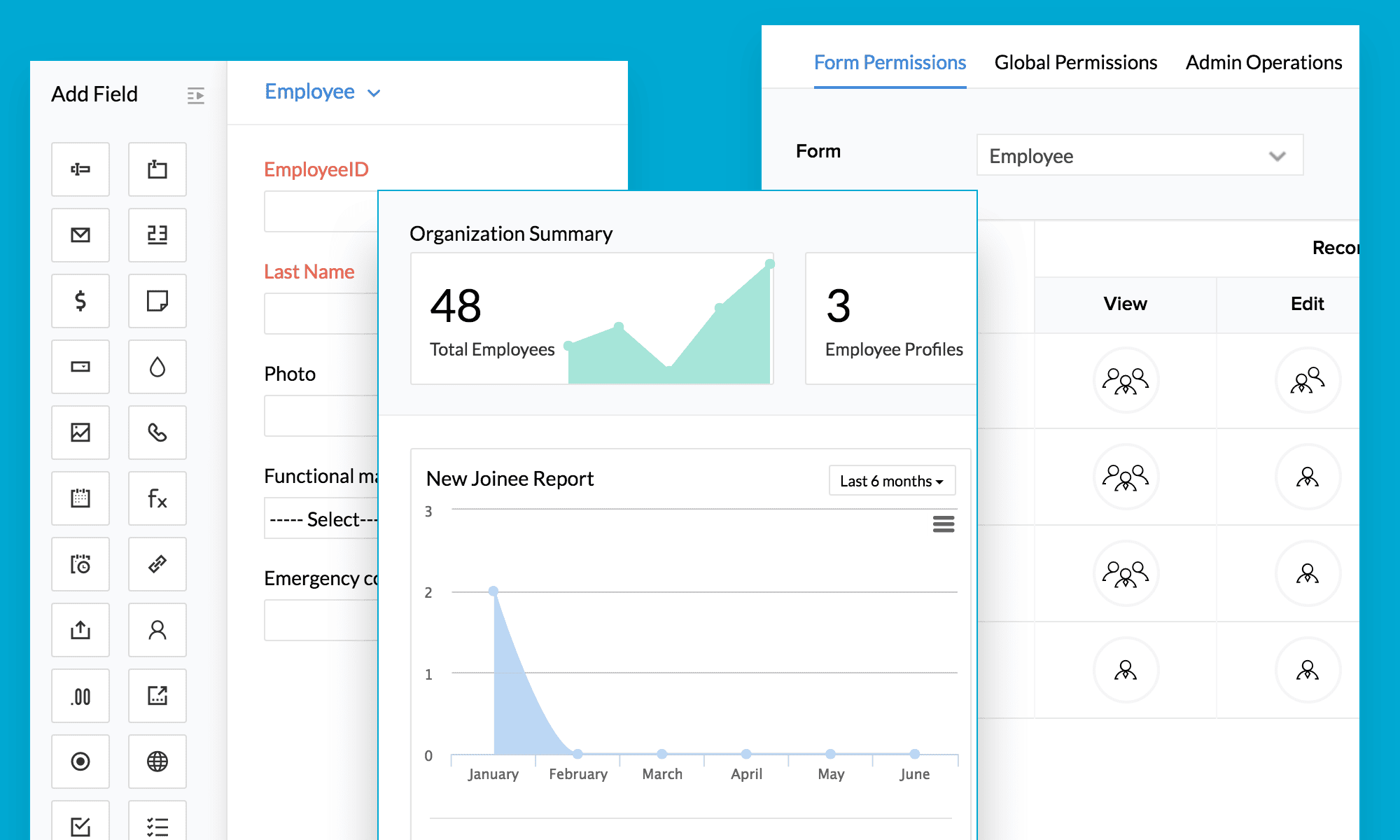
Zoho People is a cloud-based help desk software founded in 2008 and headquartered in Chennai, India. It consists of features such as HR case management, ticket management, automation, employee management, and reporting features.
It allows employees to file tickets, track their status, and access a knowledge base. Zoho Desk provides automation capabilities and reporting features. Further, it offers seamless integration with other Zoho apps and platforms such as DocuSign, Greedy HR, Zaoier, etc.
Key Features of Zoho People:
The key features of Zoho People:
- Recruitment
- Onboarding
- Employee Management
- Payroll
- Performance Management
- Employee Database Management
- Time and attendance tracking
- Document management
- HR Analytics
- Assessments
- HR Chatbot
- Employee Referral
- eNPS and Annual Surveys
Pros of Zoho People:
As per the customer reviews, these are the benefits of Zoho People:
- Flexible Customization Options: Zoho People provides various customization options for businesses to adapt HR processes.
- Integrated Learning and Development: The platform has a strong Learning Management System for employee growth.
- Comprehensive Performance Management: Zoho People's performance management module offers flexible goals and ongoing reviews.
Cons of Zoho People:
Based on the user’s feedback, the following are the disadvantages of Zoho People:
- Complexity for New Users: As per new users have faced issues when using the platform's features.
- Occasional Integration Challenges: Some users report issues integrating Zoho People with third-party applications, affecting efficiency.
Expert Take:
Zoho People is ideal for SMBs and cost-conscious growing organizations that need flexible HR, performance management, and learning tools at an affordable price. However, organizations that require advanced talent intelligence or global workforce planning may find its features limiting over time.
7. ADP Workforce Now
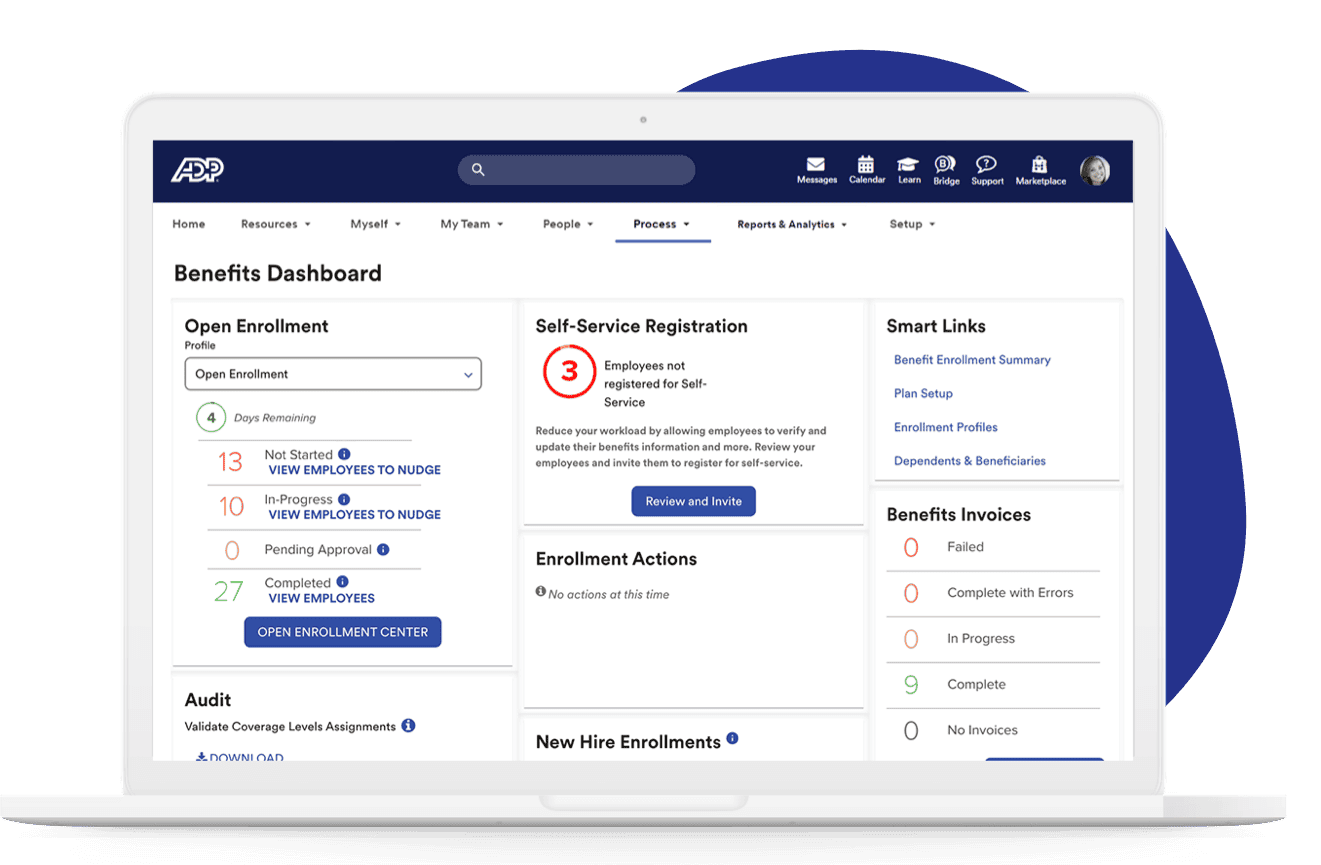
ADP Workforce Now is a part of ADP software that offers a unified platform for both global and local businesses. It offers payroll, global human capital management (HCM), and outsourcing solutions to more than 140 countries, including the United States, Brazil, India, and Mexico.
At its core, ADP Workforce Now simplifies payroll processing, ensuring that employees are paid accurately and on time. It was founded in 2011 and the headquarters are located in Boulevard, Roseland, New Jersey.
Key Features of ADP:
The key features of ADP are as follows:
- Payroll
- HR Insights
- Workforce Management
- Performance Management
- Benefits Administration
- Talent Management
- Time and Attendance Tracker
- Recruiting and Hiring
- Employee Experience
Pros of ADP:
According to the customer reviews here are the benefits of using ADP:
- Comprehensive Talent Management: ADP offers businesses a comprehensive single-product solution for talent management tools.
- Data-Driven Insights: ADP gives businesses access to benchmark data for effective people decisions.
- Global Reach: ADP operates in more than 140 countries, making it ideal for multinational corporations that require consistent talent management around the world.
Cons of ADP:
As per the user's feedback, following are the cons of ADP:
- Advanced Implementation: As per reviews installing ADP's talent management system is complex and time-consuming.
- Pricing Issues: ADP's full features are expensive, and possibly unaffordable for small companies.
Expert Take:
ADP Workforce Now is ideal for medium and large businesses looking for integrated payroll, compliance, workforce management, and talent development. Companies in regulated environments gain from ADP's compliance expertise. However, smaller businesses might find the platform overly comprehensive if their focus is solely on payroll.
8. Paylocity
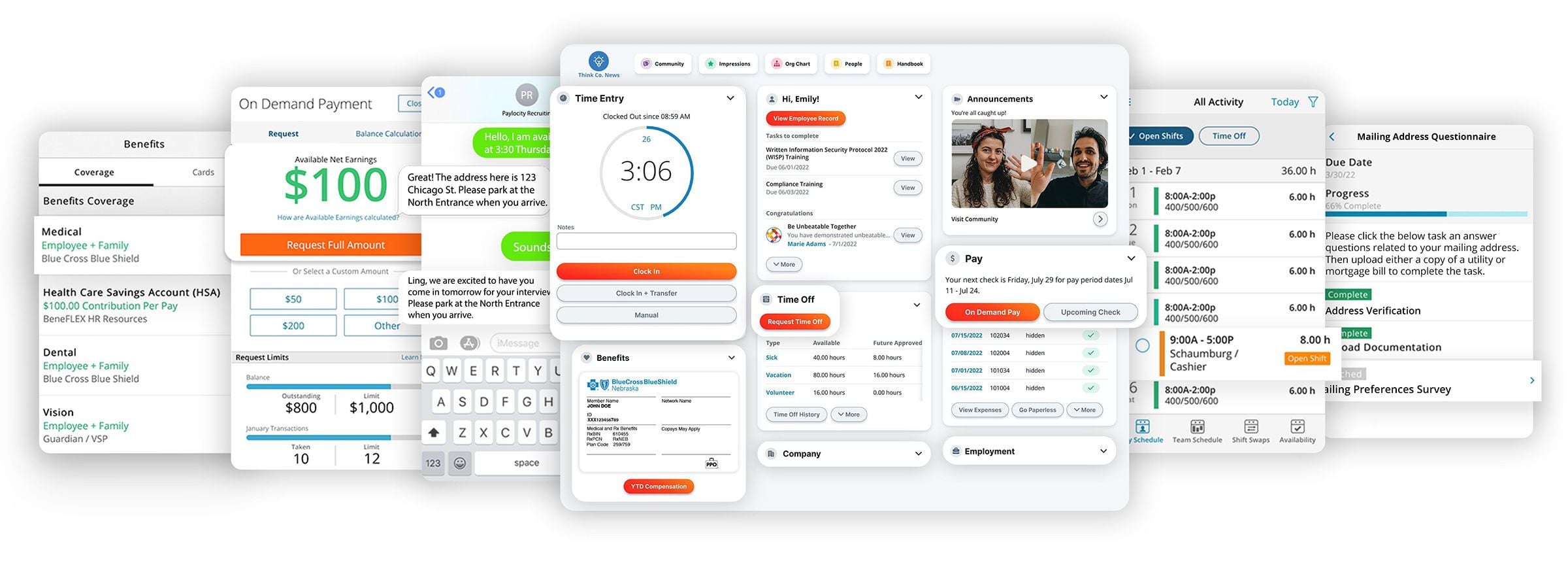
Paylocity was founded in 1997 and its headquarters are located in Schaumburg, Illinois. It provides a unified platform for payroll, workforce management, talent acquisition, employee self-service, and employee engagement.
Paylocity acquired Airbase Inc. in September 2024, enhancing its spending management software offerings to streamline HR operations and boost business growth. It offers integrations with platforms such as QuickBooks and Xero, Greenhouse, iCIMS, PlanSource, etc.
Key Features of Paylocity:
The key features of Paylocity are as follows:
- Recruiting
- Onboarding
- Payroll
- Compliance Support
- Workforce Management
- Time and Labour Management
- Employee Experience
- Performance Management
- Employee Self Service
- HR Reporting and Data Analytics
Pros of Paylocity:
According to the user reviews these are the benefits of using Paylocity:
- Comprehensive Integration: Paylocity's platform seamlessly integrates various HR functions, reducing the need for multiple systems while increasing efficiency.
- User-Friendly Interface: Paylocity's user-friendly software is designed for easy adoption by all technical skill levels.
- Scalable Solutions: According to reviews Paylocity provides scalable solutions for businesses of various sizes.
Cons of Paylocity:
These are the cons of using Paylocity as per the variety of reviews given by users:
- Customization Limitations: Some users have observed that the platform is strong but may lack customization options.
- Customer Support Response Time: Some clients say customer support response times are slower during busy periods.
Expert Take:
Paylocity is an ideal choice for small and mid-sized businesses that need a unified system for payroll, employee engagement, performance management, and HR administration. However, it is not suited for complex global enterprises with advanced workforce planning needs, despite its strong user experience and HR functionality.
9. Paycor
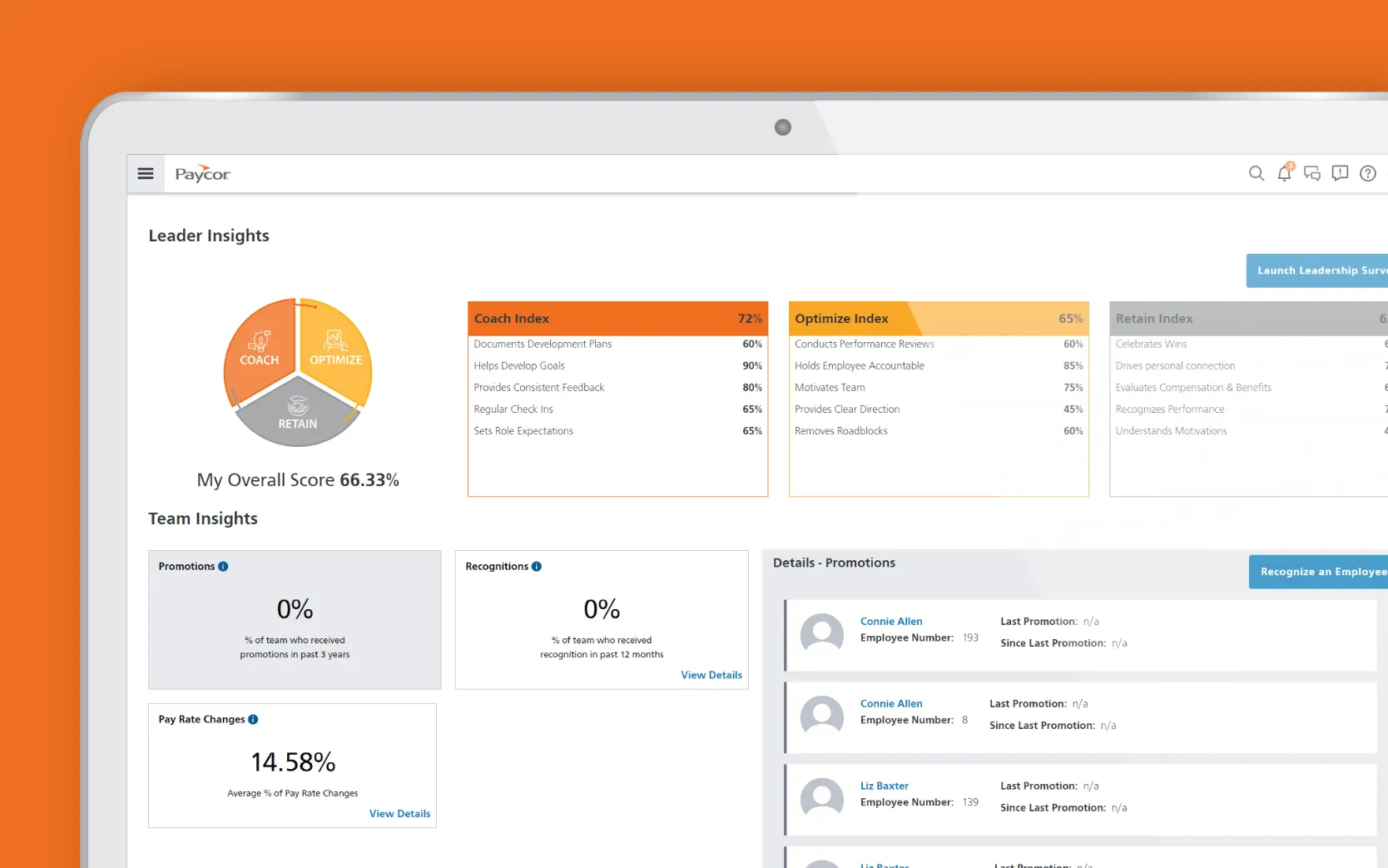
Paycor is an all-in-one HR software solution established in 1990 in Cincinnati, Ohio. It encompasses various functionalities, including payroll and performance management, as well as robust reporting features.
Further, it was designed specifically for expanding businesses aiming to enhance their HR operations. Paycor seamlessly integrates with well-known platforms like Human Interest, DailyPay, and PuzzleHR, among others.
Key Features of Paycor:
The key features of Paycor HR software:
- Payroll Management
- Benefits Administration
- Recruiting Tools
- Payroll and Workforce Solutions
- Automated Talent Sourcing
- 320+ Integrations
- Time and Attendance Tracking
- HR Compliance
- Expense Management Software
- Analytics and Reporting
Pros of Paycor:
According to the number of customer reviews, these are the benefits of the Paycor talent management tool:
- Effective Onboarding Experience: The onboarding module helps new hires integrate smoothly. It offers guidelines and resources to improve engagement and retention.
- Robust Workforce Analytics: Customers say that the detailed analytics offer insights into important HR metrics and performance trends.
- Comprehensive Reporting Features: The platform provides clear information on HR metrics through easy-to-generate reports for tracking performance.
Cons of Paycor:
Based on the user feedback these are the following cons of Paycor:
- Limited Scalability for Larger Enterprises: Paycor is primarily designed for small to mid-sized businesses. However, its scalability may be limited for larger organizations with complex workforces.
- Customer Support Inconsistencies: Some users have noted that there are delays in issue resolution and variability in service quality.
Expert Take:
Paycor is an excellent choice for small and mid-sized businesses that need payroll, talent development, recruiting, and workforce analytics in one system. It supports growing companies seeking efficiency. However, it may not suit multinational companies that need extensive global HR capabilities.
10. ClearCompany
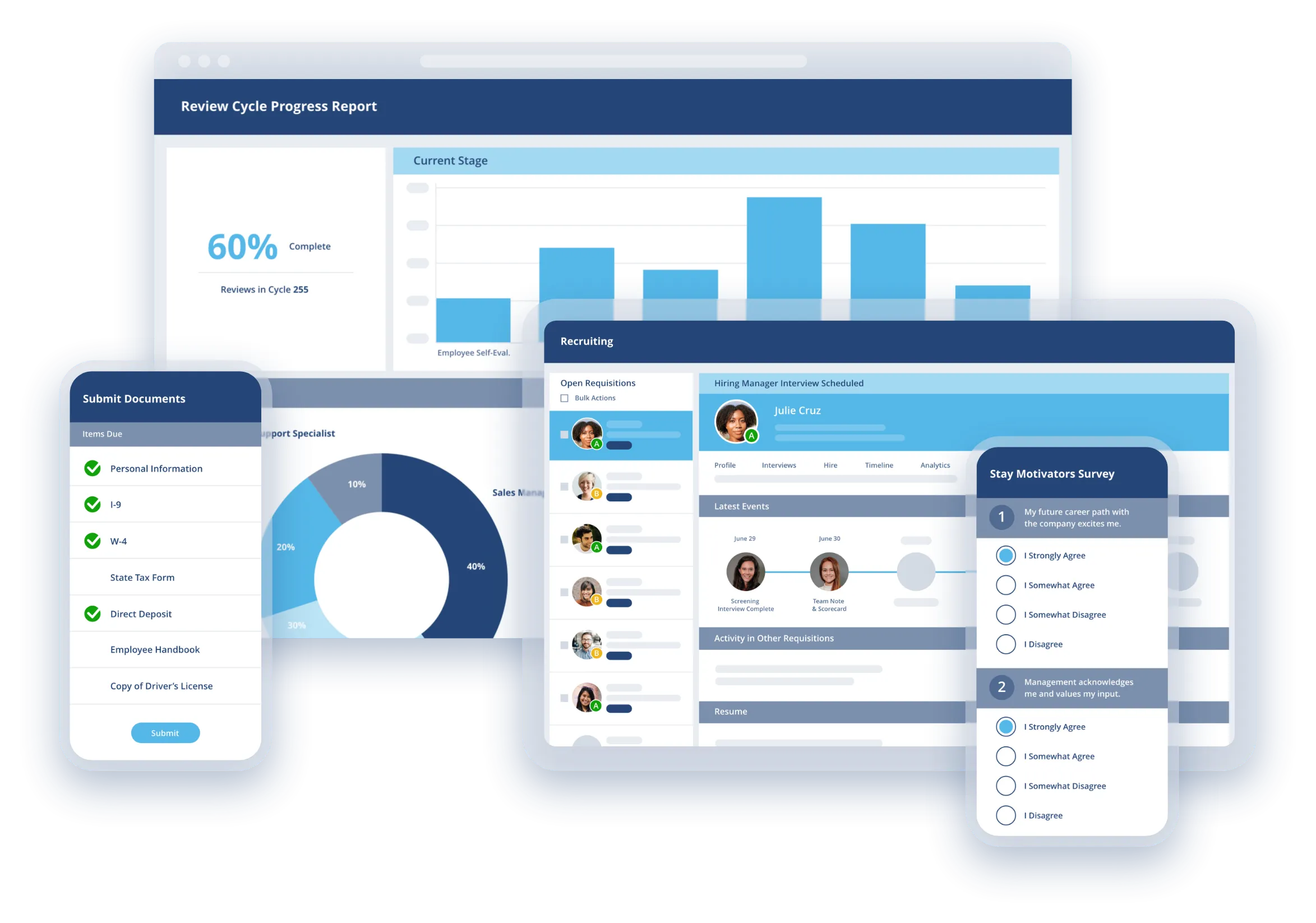
ClearCompany was established in 2004 and is headquartered in Boston, Massachusetts. It is a modern Talent Acquisition Management System designed to help businesses attract, retain, and develop top talent.
ClearCompany offers a unified solution that integrates applicant tracking, onboarding, performance management, and employee engagement. Furthermore, it offers integrations with other ClearCompany tools and third-party applications such as UKG, ADP, BambooHR, Indeed, Salesforce, Dayforce, etc.
Key Features of ClearCompany:
Here are the key features of using ClearCompany:
- Applicant Tracking System (ATS)
- Performance Management
- Onboarding
- Employee Engagement
- Analytics and Reporting
- Background Checks
- Learning
- AI Functionalities
Pros of ClearCompany:
After reading the reviews we found the following benefits of using Clear Company:
- Efficient Applicant Tracking: ClearCompany offers a clear view of job postings and applicant status. The user-friendly design helps track candidates efficiently, resulting in a more organized recruitment process.
- Streamlined Recruitment Process: The platform improves recruitment processes with tools for sourcing, interviewing, and selecting candidates efficiently.
- Strong Onboarding Capabilities: The onboarding module integrates new hires into the company culture with clear guidelines and resources. Thus it helps in improving retention and learning.
Cons of ClearCompany:
According to customer reviews, following are the drawbacks of using ClearCompany:
- Navigation Challenge: New users may find the system's features and navigation challenging. Learning the functions takes time, slowing adoption and requiring support.
- Limited Customization Options: The platform has fewer customization options than competitors, which limits flexibility for organizations.
Expert Take:
ClearCompany is ideal for mid-sized and growing organizations that need a unified platform for recruiting, onboarding, performance management, and employee engagement. However, it may not suit very small businesses or enterprises that need highly customized global workforce management.
11. PageUp
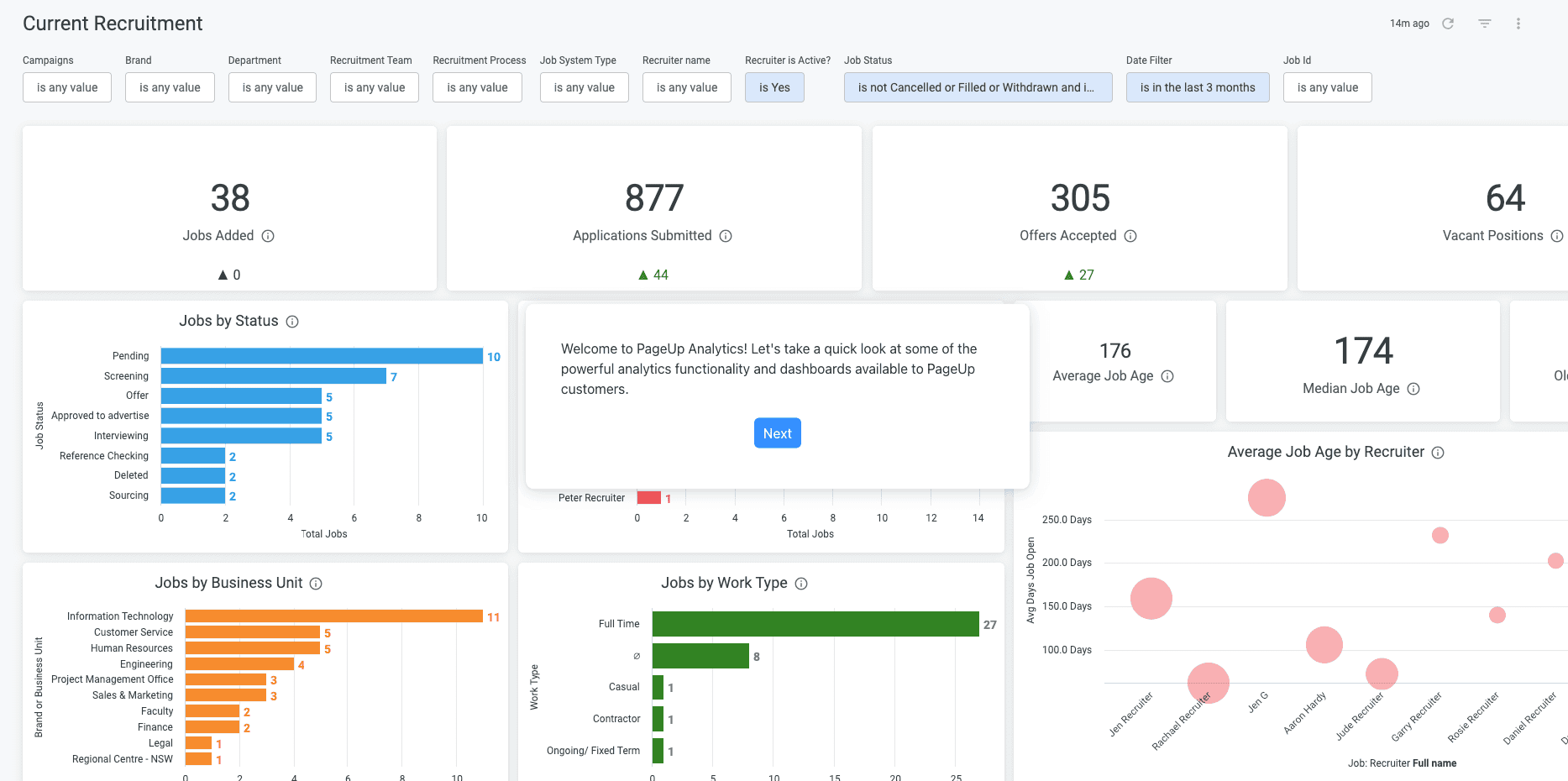
PageUp was established in 1997 and headquartered in Melbourne, Australia. It is a all in one talent management platform designed to optimize the entire employee lifecycle.
PageUp's system provides solutions for recruitment, onboarding, learning, performance management, and succession planning. It offers 150+ integrations with platforms such as Hire Right, Accurate, Seek, etc.
Key Features of PageUp:
The key features of PageUp:
- Recruitment Marketing
- Applicant Tracking System
- Onboarding
- Employee Connection
- Analytics
- Succession Management
- Learning Management
- Performance Management
Pros of PageUp:
As per the reviews on the internet, these are the pros of PageUp:
- End-to-End Talent Management: Customers love the fact that PageUp offers a full range of tools for talent management. It helps them to manage all their stuff here with this one platform.
- Analytics-Driven Insights: PageUp provides analytics for informed workforce strategy decisions.
- Global Reach: PageUp effectively supports teams in over 190 countries like Melbourne, Sydney, New York, London, etc.
Cons of PageUp:
These are the drawbacks of PageUp highlighted by customers:
- Implementation Time: Setting up PageUp is time-consuming due to many features.
- Cost Considerations: The platform's comprehensive nature can lead to higher costs. This can impact smaller organizations with limited budgets.
Expert Take:
PageUp serves as a strong platform for education, healthcare, government, and enterprise sectors focused on recruitment and succession planning. However, smaller businesses with basic hiring needs may not benefit from its advanced features, making it best suited for those with structured workforce planning.
12. RemoFirst
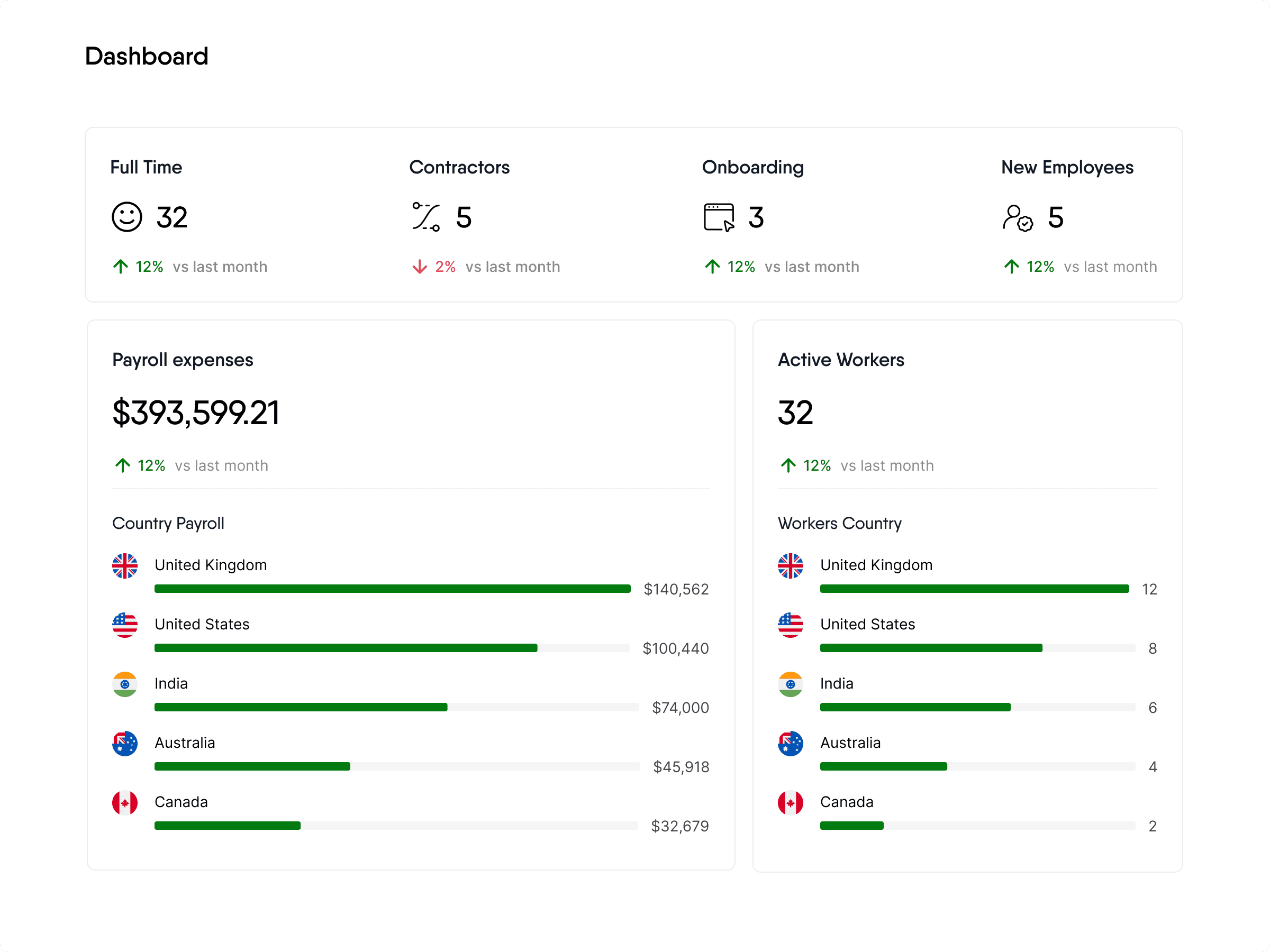
RemoFirst was founded in 2021 and is headquartered in San Francisco, California. As a global Employer of Record (EOR) solution, it enables companies to employ and manage employees in over 180 countries such as the United States, Canada, United Kingdom, Germany, Australia, etc without local entities.
RemoFirst's talent management solutions are focused on simplifying international hiring, ensuring compliance, and streamlining global payroll. Moreover, it offers integration with famous platforms, and RemoFirst ensures compliance with local labor laws and employment regulations across its global network.
Key Features of RemoFirst:
The key features of RemoFirst are:
- Employer of Record
- Workforce Management
- Global Payroll
- International Contractors
- Background Checks
- Remo Health
- Visas and Work Permits
Pros of RemoFirst:
According to the customer’s reviews, we have found the following pros of RemoFirst:
- Competitive Pricing: RemoFirst offers budget-friendly solutions, making it ideal for startups as well as small and medium enterprises.
- Fast Onboarding: This human resources talent management software enables quick onboarding of new employees for faster productivity.
- Full Global Coverage: Having a presence in over 180 countries, RemoFirst allows businesses to tap into an extensive talent pool without geographic restraints.
Cons of RemoFirst:
Based on the feedback these are the drawbacks of using RemoFirst:
- Limited Brand Recognition: RemoFirst is a new player in the market and lacks brand recognition compared to established competitors.
- Feature Set Development: In offering core services, certain advanced features are difficult to understand.
Expert Take:
RemoFirst supports startups, remote-first companies, and SMBs in hiring global talent without local legal entities. It specializes in global employment, helping businesses expand internationally. However, it is not intended for enterprises that require comprehensive performance management or succession planning.
13. Cegid Talentsoft
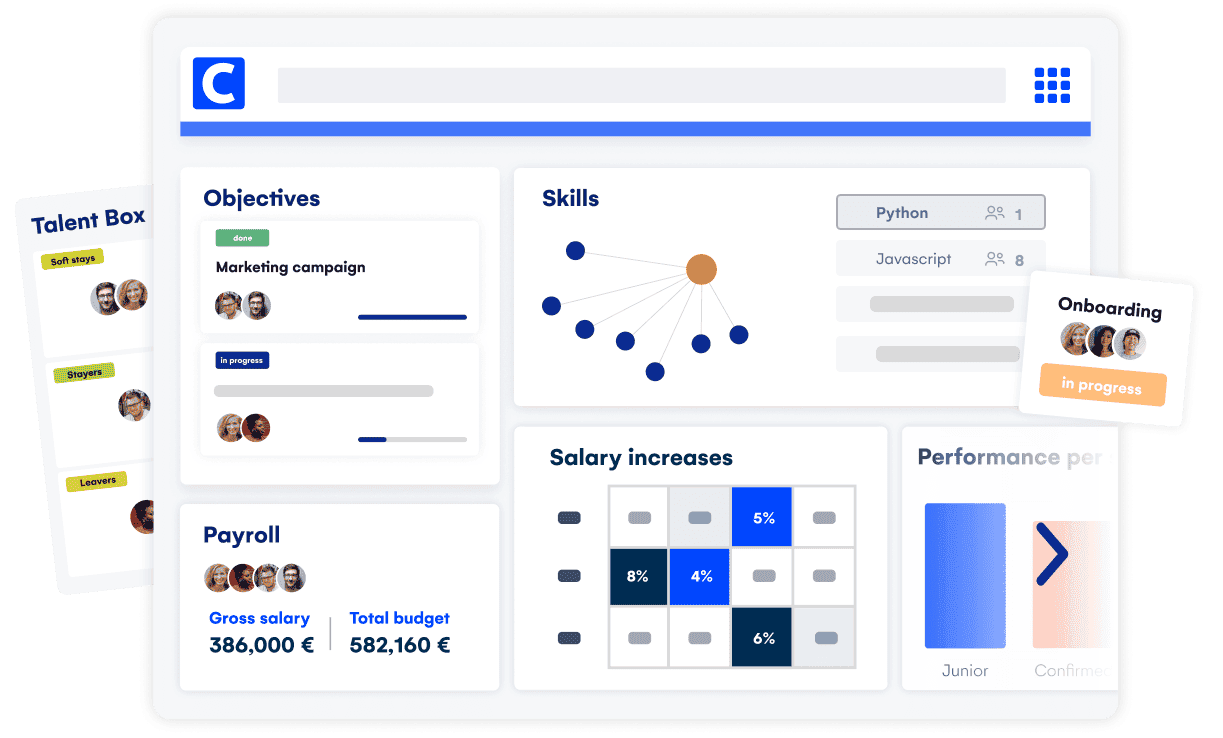
Ceigd was established in 1983 and headquartered in Lyon, France. Furthermore, it acquired Talensoft in 2021. Cegid Talentsoft is a comprehensive Human Capital Management (HCM) solution that supports administration, talent acquisition, talent management, etc.
Cegid TalentSoft focuses on enhancing the employee experience and aligning HR processes with business objectives. Furthermore, Cegid hasn’t said anything about its integration with other platforms so far.
Key Features of Cegid Talentsoft:
These are the key features of Cegid Talentsoft:
- Talent Acquisition
- Talent Management
- Learning Management
- AI Functionality
- Analytics and Reporting
- ATS and CRM
- Employee Experience
- AI Functionality
Pros of Cegid Talentsoft:
Based on user feedback here are the benefits of using Cegid Talentsoft:
- Personalized Employee Development: Cegid Talentsoft provides tools for appraisals, training, and career growth.
- Robust Recruitment Module: The platform includes a comprehensive recruitment module that helps to attract and retain top talent.
Seamless Integration: Cegid Talentsoft works well with current HR systems.
Cons of Cegid Talentsoft:
Following are the cons of Cegid Talentsoft as per the user’s reviews:
- Complexity for Small Businesses: The platform's many features may confuse smaller organizations with basic HR needs.
- Customization Challenges: Some users say customizing the system to meet specific needs takes time and extra help.
Expert Take:
Cegid Talentsoft best suited for organizations that prioritize employee development, learning and performance management, particularly in Europe and multinational contexts. However, Smaller businesses might find it more advanced than necessary. Its strengths lie in skills development, career pathing, and talent retention strategies.
14. Namely
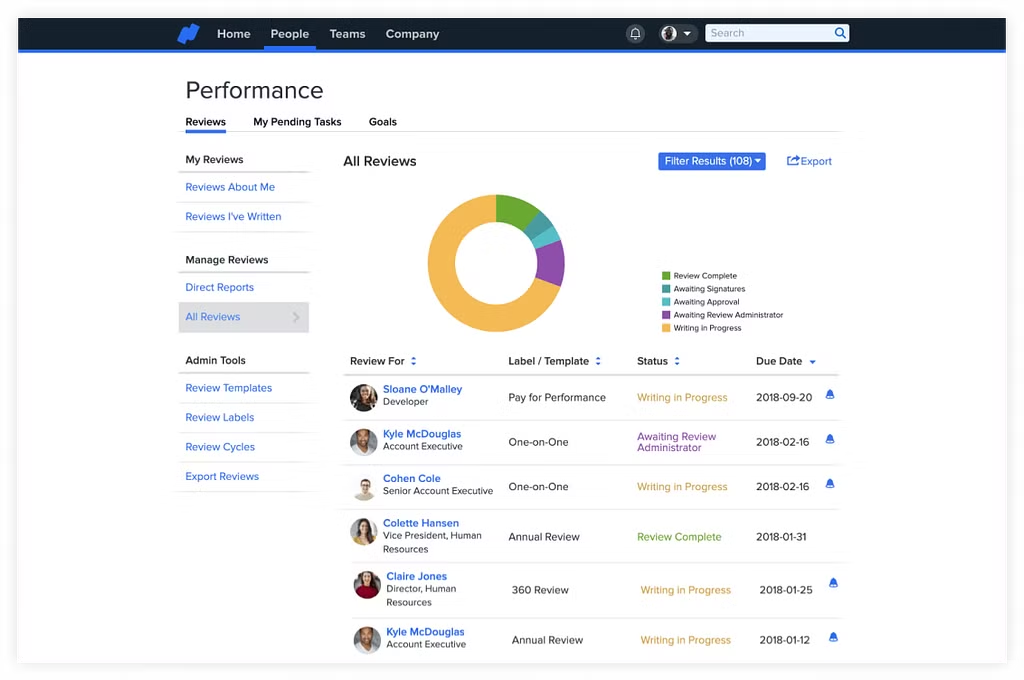
Namely was founded in 2012, and the headquarters are in New York City. At its core, Namely is an all-in-one HCM platform with robust employee database capabilities. Namely handles everything, from onboarding new employees to managing payroll.
Besides this, Namely provides feature like performance, talent management to improve processes and engagement. It offers integration with platforms such as Jazz HR, Breezy, Workable, Jobscrore, Lattice, etc.
Key Features of Namely:
Here are the key features of Namely:
- HR Management
- Onboarding
- Talent Management
- HR Analytics and Reporting
- Compliance
- Payroll
- Benefits Administration
- Time and Attendance
- Performance Reviews
- Goal Setting
- Employee Self-Service
Pros of Namely:
According to the customer reviews here are the pros of Namely:
- User-Friendly Platform: Namely provides an easy-to-use interface that streamlines HR tasks for everyone.
- Comprehensive HR Solution: Namely offers a unified platform that combines payroll, benefits, and performance management.
- Employee Engagement Tools: Users like the features company newsfeed and self-service options to promote connection and engagement.
Cons of Namely:
Here are the cons of Namely given by customers:
- Limited Advanced Features: Some users said Namely covers basic HR functions but lacks advanced features for larger organizations.
- Integration Constraints: Users report that integrating Namely with other software can be difficult and requires technical assistance.
Expert Take:
Namely is designed for small and mid-sized organizations that require HR, payroll, benefits administration, and performance management on a single platform. While it provides great value for U.S.-based businesses seeking simplicity, it may not meet the needs of global enterprises with complex compliance requirements.
15. Deel
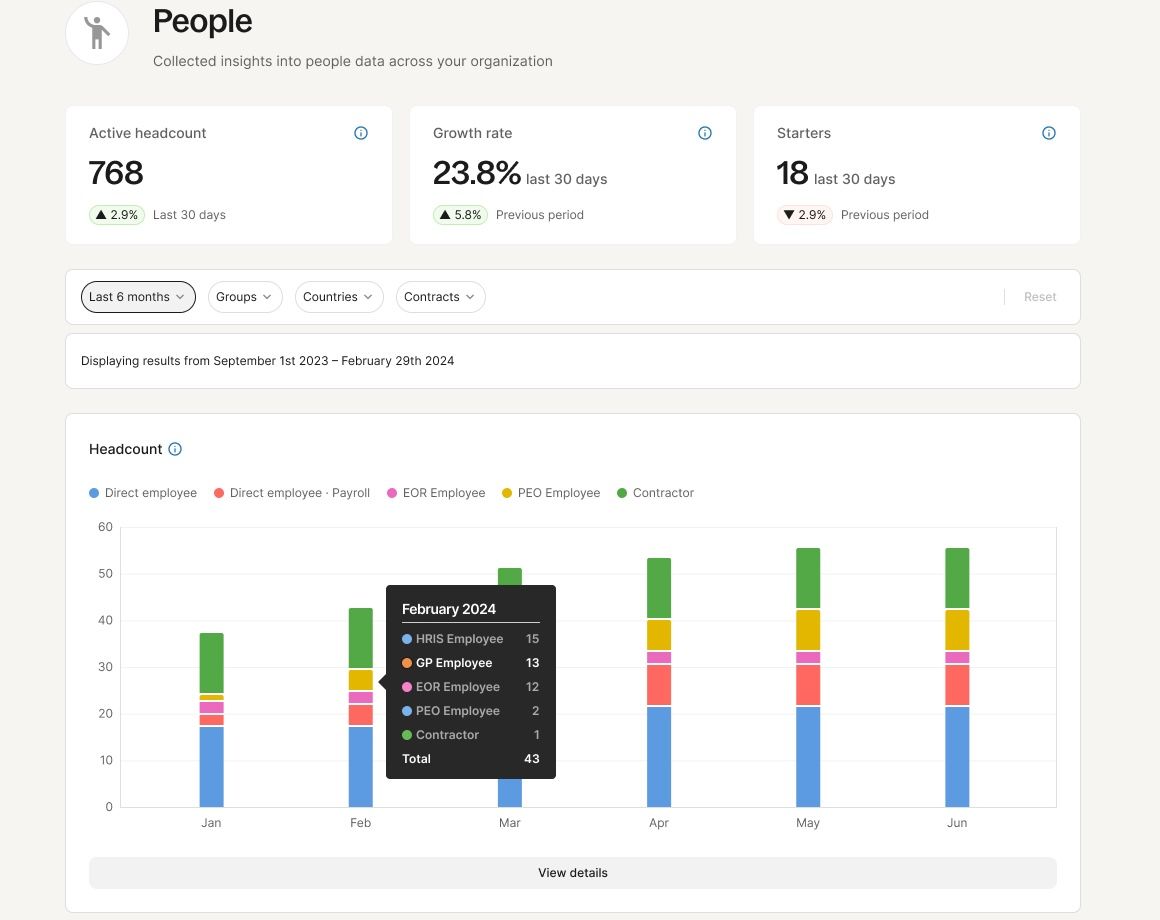
Deel HRIS was established in 2015 in San Francisco, California. It streamlines global payroll, recruitment, and employee benefits for companies with international workforces. The platform serves contractors and full-time staff, ensuring compliance in 150 countries.
Furthermore, you can manage your global workforce using one HR platform that manages data, time off, expenses, and reporting. Deel also offers in-house visa support for hiring or relocating employees. It integrates with platforms like Workable, Google, Xero, and Slack.
Key Features of Deel:
These are the key features of Deel:
- Global Payroll
- Contractor Management
- Tax and Compliance Automation
- Benefits Administration
- Expense Management
- Performance Management
- Career Management
- Localized Contracts and Agreements
- Automated Invoicing
- Learning Management
Pros of Deel:
As per the reviews here are the pros of Deel:
- Easy-to-Use Interface: As per the reviews the interface of Deel is simple to use. It thus reduces the learning time for users.
- Robust Compliance Support: Deel ensures compliance with local labor laws for international hiring.
- Easy Payment Options: The platform supports various currencies and payment methods. It facilitates easy payment of global teams.
Cons of Deel:
Here are the cons of using Deel as per the user’s reviews:
- Pricing Transparency: Some users say Deel's pricing can be misleading, with costs differing by services and locations.
- Limited Personalization: As per users Deel has good features but may lack personalization for large companies.
Expert Take:
Deel excels for distributed teams, startups, and multinational organizations managing global hiring, contractor payments, and compliance in multiple countries. However, it isn't the best fit for those who need a full talent management suite with advanced learning and workforce analytics.
10 Best Free Talent Management Tools
If you don't want to pay for a TMS, that's fine. We have included some free talent management tools. Some of these offer a complete TMS suite, while others have key features that make them suitable:
How Does a Talent Management Platform Work?
A talent management system software combines HR functions into a data-driven framework, enabling organizations to manage the employee lifecycle from recruitment to retirement efficiently.
Here is how talent management solutions works from employee hiring to managing their related stuff:
1. Recruitment and Hiring
TMS starts with attracting and choosing the right talent. It uses advanced applicant tracking systems (ATS) to make recruitment easier. Furthermore to do so these systems often use AI algorithms to review resumes, find top candidates, and predict their suitability for the organization.
As per data AI screening tools can cut resume review time by up to 75%. TMS help with pre-screening questionnaires and skills tests. This however allows HR teams to focus on the best candidates. This data-driven method saves time and aids in making better hiring choices.
2. Onboarding
Once a candidate is selected, the TMS is engaged to ensure a seamless onboarding process. Modern systems provide dedicated onboarding portals that simplify paperwork, educate new hires on corporate standards, and help them integrate into the organizational culture.
Effective onboarding is important since it sets the tone for an employee's experience with the organization. A well-implemented TMS can shorten the time it takes for new employees to become productive, leading to greater retention rates.
3. Performance Management
Performance management is a critical component of any talent management tool. These platforms provide tools for setting and tracking employee goals, facilitating regular check-ins, and conducting performance reviews.
Many modern TMS platforms emphasize continuous performance management rather than annual reviews. This approach allows for more frequent feedback and course corrections, fostering a culture of ongoing improvement and engagement.
4. Learning and Development
Talent management softwares include strong learning management features to stay up with the quickly changing skill requirements. These resources enable businesses to:
- Identify skill gaps through performance data and assessments
- Create personalized learning paths for employees
- Provide a range of training materials, such as live workshops and online courses.
- Track progress and measure the impact of learning initiatives.
Learning and development are integrated with other HR functions by a TMS. This guarantees that employee growth is in line with both personal and professional goals. Up to 78% of learning leadership organizations use a learning management system (LMS) for constant growth.
5. Succession Planning
Talent management softwares are critical for identifying and developing future leaders in a business. These platforms create succession plans for key positions based on data from performance reviews, skill assessments, and career objectives.
By providing a clear view of the talent pipeline, TMS allows businesses to manage future leadership gaps and ensure business continuity. Companies with succession plans are 2.2 times more likely to outperform competitors in talent retention.
6. Compensation Management
Many talent management solutions include tools for managing compensation and benefits. These features allow organizations to:
- Design and implement fair and competitive compensation models
- Align rewards with performance metrics
- Ensure compliance with relevant regulations
- Provide transparency in compensation decisions
7. Analytics and Reporting
Perhaps one of the most powerful aspects of a talent management software is its ability to provide deep insights through analytics and reporting. These platforms collect and analyze vast amounts of data across all HR functions, enabling organizations to:
- Identify trends in employee performance and engagement
- Predict turnover risks
- Measure the effectiveness of HR initiatives
- Make data-driven decisions about workforce planning
Advanced TMS platforms often incorporate AI and machine learning algorithms to provide predictive analytics, helping organizations stay ahead of potential HR challenges.
8. Employee Engagement
Nowadays cool tools for checking and boosting how much people care about their work come with the latest talent management systems. These may include:
- Regular pulse surveys to gage employee sentiment
- Recognition and reward programs
- Social collaboration tools to foster a sense of community
- Career development resources to support employee growth
By focusing on engagement, organizations can create a more positive work environment, leading to higher productivity and lower turnover rates.
9. Compliance Management
Multinational organizations find it complex to manage compliance in various jurisdictions. Therefore, talent management platforms help ensure HR practices follow local laws and regulations.
10. Integration with Other Systems
To maximize efficiency, talent management systems often integrate with other business applications, such as:
- Payroll systems
- Time and attendance tracking
- Financial management software
- Customer relationship management (CRM) platforms
These integrations create a more holistic view of the organization and enable smoother workflows across departments.
Top 10 Benefits of Talent Management Systems
Here are the top 10 best benefits of talent management tools:
1. Smarter Hiring Decisions
A TMS ensures that companies hire the best talent as soon as possible by streamlining the hiring process with data-driven insights. This lowers turnover expenses, minimizes hiring errors, and creates high-performing teams.
2. Stronger Employee Engagement
Employees feel appreciated and inspired when they have access to tools for recognition, real-time feedback, and ongoing performance monitoring. Companies with highly engaged employees are 23% more profitable, and 18% more productive.
3. Higher Productivity and Performance
Programs for skill development and customized learning pathways are provided by a talent management system. Employee efficiency increases with regular upskilling, which boosts output and expands the company.
4. Better Retention Strategies
HR teams can develop customized retention strategies by examining employee engagement levels, performance trends, and satisfaction. This guarantees long-term stability, lowers turnover, and cultivates a dedicated workforce.
5. Seamless Workforce Planning
A TMS enables businesses to predict future talent requirements and identify skill gaps. Companies that plan ahead of time can prepare for growth, succession, and industry changes while minimizing workforce disruption.
6. Improved Performance Management
HR teams can use the TMS to monitor employee progress, set clear goals, and provide helpful criticism. Moreover, this structured approach results in better accountability, continuous improvement, and career advancement.
7. Benefits Management
Automating payroll, bonuses, and benefits ensures fair compensation and compliance with regulations. Competitive pay structures boost job satisfaction while attracting top talent.
8. Enhanced Compliance and Risk Management
A TMS ensures organizations follow labor laws, industry regulations, and company policies. Automated compliance tracking reduces risks and protects businesses from legal complications.
9. Proactive Succession Planning
Businesses can create future leaders by spotting high-potential workers and fostering their development. This guarantees seamless transitions during promotions or exits and avoids leadership gaps. 86% of companies with good succession planning software see higher employee engagement and retention rates.
10. Data-Driven Decision
HR teams can keep an eye on workforce trends and improve talent strategies with the help of sophisticated analytics and reporting tools. By assisting companies in making well-informed decisions, predictive insights increase worker productivity.
How to Choose the Right Talent Management System?
Follow these steps to make you choose the best talent management solutions for your business:
Step 1. Define Your Business Needs
First, check your business needs and requirements like. There might be different kinds of requirements such as recruitment, performance tracking, or employee training. This helps in selecting the right talent management solution and what you need from the solution.
Step 2. Check Integration Capabilities
Businesses use different tools to ensure a better workflow. Hence, before choosing the best talent management software ensure that integrates with your existing HR tools and payroll systems. It will avoid disruptions and ensure smooth data flow.
Step 3. Look for a User-Friendly Interface
Look for a TMS that has a user-friendly interface and easy to use. It will save time and effort for employees and HRs to start working on them.
Step 4. Assess Scalability
There are different best talent management software will different sets of benefits. Thus, it is advisable to pick a TMS that grows with your changing workforce and future needs. Irrespective of the fact that whether you run a startup, small business, or enterprise-level office.
Step 5. Consider Customer Support
Customer support is very crucial in everything from software to other day-to-day items. Therefore, read about the customer support policies of the TMS, its real-time reviews, and insights from users. Always choose a TMS that offers a reliable support system.
Why Does Your Company Need a Talent Management System?
Manually managing employees can be inefficient and time-consuming. A talent management software automates training programs, monitors employee performance, and expedites the hiring process. Furthermore, this helps companies keep top talent, gives HR teams useful data insights for better decisions, and improves productivity.
Businesses that invest in a TMS see increased employee engagement, lower turnover, and more effective hiring. By using automation businesses can create a skilled workforce and stay competitive using. In short, businesses that use TMS see long-term success and workforce stability.
Why Trust Our Reviews? - Research Methodology
Our review methodology involved over 140 hours of evaluating the talent management software market. We started with 35 talent management systems, narrowing the list to the top 15 based on talent lifecycle coverage, AI capabilities, performance management, learning and development, succession planning, workforce analytics, scalability, and integrations.
Further, we analyzed verified user reviews from G2, Capterra, and independent research, cross-referencing feedback on usability, implementation, reporting, employee experience, customer support, product reliability, and long-term value to identify each platform's real-world strengths and limitations.
Additionally, we have no paid partnerships with any vendor featured in this list. Our goal is to provide HR leaders, CHROs, People Operations teams, and business decision-makers with unbiased insights to help them confidently choose the right talent management software for their organization.
Summary
As we move forward in the digital age, talent management systems evolve. New technologies, such as artificial intelligence and machine learning, are improving these platforms and providing more tools for workforce optimization.
Furthermore, the shift to remote and hybrid work emphasizes the need for robust TMS. These systems make it easier to manage remote teams, keeping employees engaged and on track with company goals.
A talent management software creates a unified, data-driven approach to human resource management. It integrates HR functions and offers analytics to help organizations make better decisions about their people. In conclusion, talent management softwares are essential for business these days.
Frequently Asked Questions
1. What is talent management software?
Talent management software helps organizations manage recruiting, onboarding, performance, learning, succession planning, and employee development in one platform. It improves workforce planning, employee engagement, and long-term talent retention.
2. What is the best talent management software for small business?
The best talent management software for small business offers affordable pricing, easy implementation, hiring tools, performance management, and scalability. It helps growing teams streamline HR processes without unnecessary complexity.
3. What are the top talent management systems with analytics?
Top talent management systems with analytics provide dashboards, workforce insights, performance tracking, hiring metrics, and predictive reporting. They help HR teams make faster, data-driven decisions and improve talent outcomes.
4. What AI talent management system has the best scalability?
The best AI talent management system for scalability supports workforce growth with automation, cloud infrastructure, advanced analytics, and integrations. Enterprise-ready platforms adapt easily to expanding hiring and talent management needs.
5. Which systems integrate talent acquisition and retention?
Integrated talent management systems combine recruiting, onboarding, performance management, learning, career development, and analytics. This unified approach improves hiring quality, employee engagement, internal mobility, and long-term retention.