











Here’s a concise TL;DR of the Top 15 Best Training Management Software in 2026 based on features, usability, integrations, and customer reviews:
- Trainual - Best for onboarding, SOPs, and employee training.
- Arlo - Training scheduling, registration, and reporting management.
- eLoomi - Combines learning, engagement, and performance management.
- LearningCart - Course delivery with e-commerce and certification tools.
- Absorb LMS - Scalable cloud LMS with automation and analytics.
- 360Learning - Collaborative and peer-driven learning platform.
- Moodle - Flexible open-source training management system.
- Docebo - Enterprise LMS with AI-powered learning workflows.
- iSpring Learn - An easy-to-use training platform with strong tracking.
- LearnUpon - Employee training with multilingual and reporting support.
- Thrive - Modern LMS focused on social and continuous learning.
- HowNow - Knowledge-sharing and on-demand workplace learning.
- SkyPrep - Compliance training and automated learning workflows.
- Zoho Training - Integrated training management for Zoho users.
- SAP Litmos - Enterprise-ready LMS with analytics and gamification.
Effective training management software streamlines employee learning, tracks progress, and boosts performance. It automates scheduling, assessments, and reporting, making training more efficient. Businesses using such tools and investing in employee training programs see a 24% increase in profitability.
With that in mind, we rigidly tested tens of training management software to bring you 15 best top solutions that can help you scale workforce performance effortlessly.
What Is a Training Management Software?
Training management software is made to help businesses keep track of all of their employee training needs. As a type of corporate training software, it provides a centralized platform to conduct classes, schedule presenters, and keep track of employee overall growth.
In short, a software used to give, manage, and keep an eye on employee training and development programs in businesses is called training management software. These apps also make training more efficient for new employees and experienced professionals alike.
Top 15 Best Training Management Software in 2026
After extensive research, we've curated a list of the robust 15 training management software solutions to help you make informed purchasing decisions. Our in-depth analysis and hands-on reviews ensure you get the best options available.
1. Trainual
Trainual founded in 2018 and headquartered in Scottsdale, Arizona, helps businesses streamline onboarding, training, and SOP creation. It allows organizations to build custom training programs, centralize knowledge, and automate workflows. This makes it easier to onboard new hires, improve efficiency, and maintain consistency across teams.
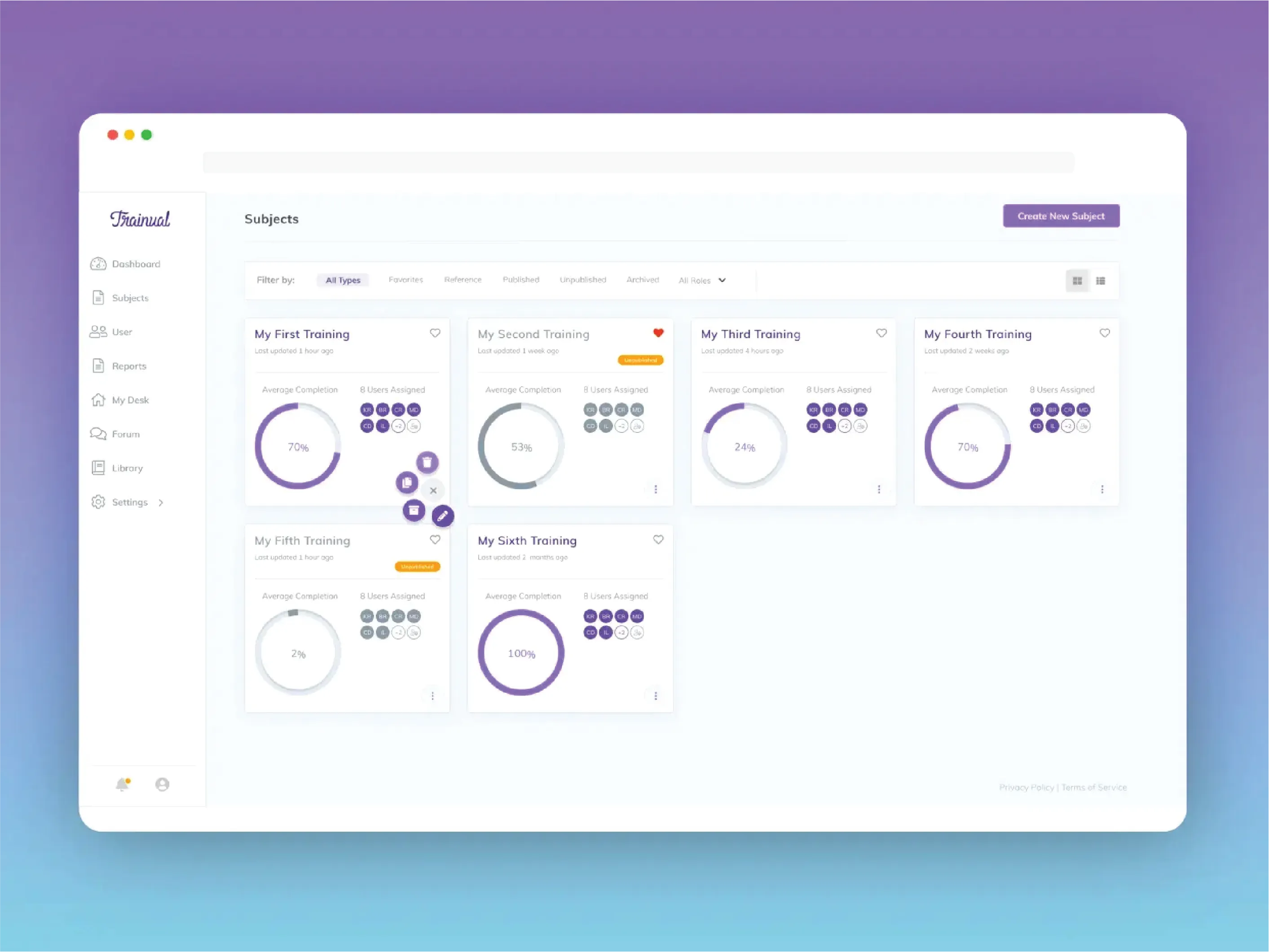
Features:
- Customizable templates
- Comprehensive content library
- Detailed process documentation
- Role-based training modules
- Streamlined onboarding checklists
- Efficient knowledge transfer tools
- Quizzes and skill assessments
- Real-time progress tracking
- In-depth reporting and analytics
- Seamless integrations with HR tools
Pros:
- Easy-to-Use Design: It has an intuitive and user-friendly interface for effortless navigation.
- Templates That Can Be Changed: It offers fully customizable templates to suit unique needs.
- Knowledge Base in One Place: It has a centralized repository for quick access to all essential information.
Cons:
- Limited Advanced Features: It lacks some sophisticated functionalities for complex needs.
- Potentially Costly for Small Teams: Its pricing may be less suitable for smaller organizations with tight budgets.
Pricing:
| Plans | Monthly |
| Small | $249 |
| Medium | $279 |
| Growth | $419 |
| Custom | Talk to sales |
Customer Rating (Review Platforms):
- G2: 4.5 stars
- Capterra: 4.6 stars
- Trustpilot: 4.3 stars
Exper Take:
Trainual is ideal for startups, SMBs, franchises, and rapidly growing remote teams needing structured onboarding and SOP training. However, large enterprises with complex compliance or advanced analytics may find it limiting compared to LMS platforms.
2. Arlo Training Management Software
Arlo, founded in 2017 and based in Wellington, New Zealand, is a cloud-based software for training management. It allows businesses to create, manage, and deliver online training programs, simplifying scheduling, invoicing, and reporting.
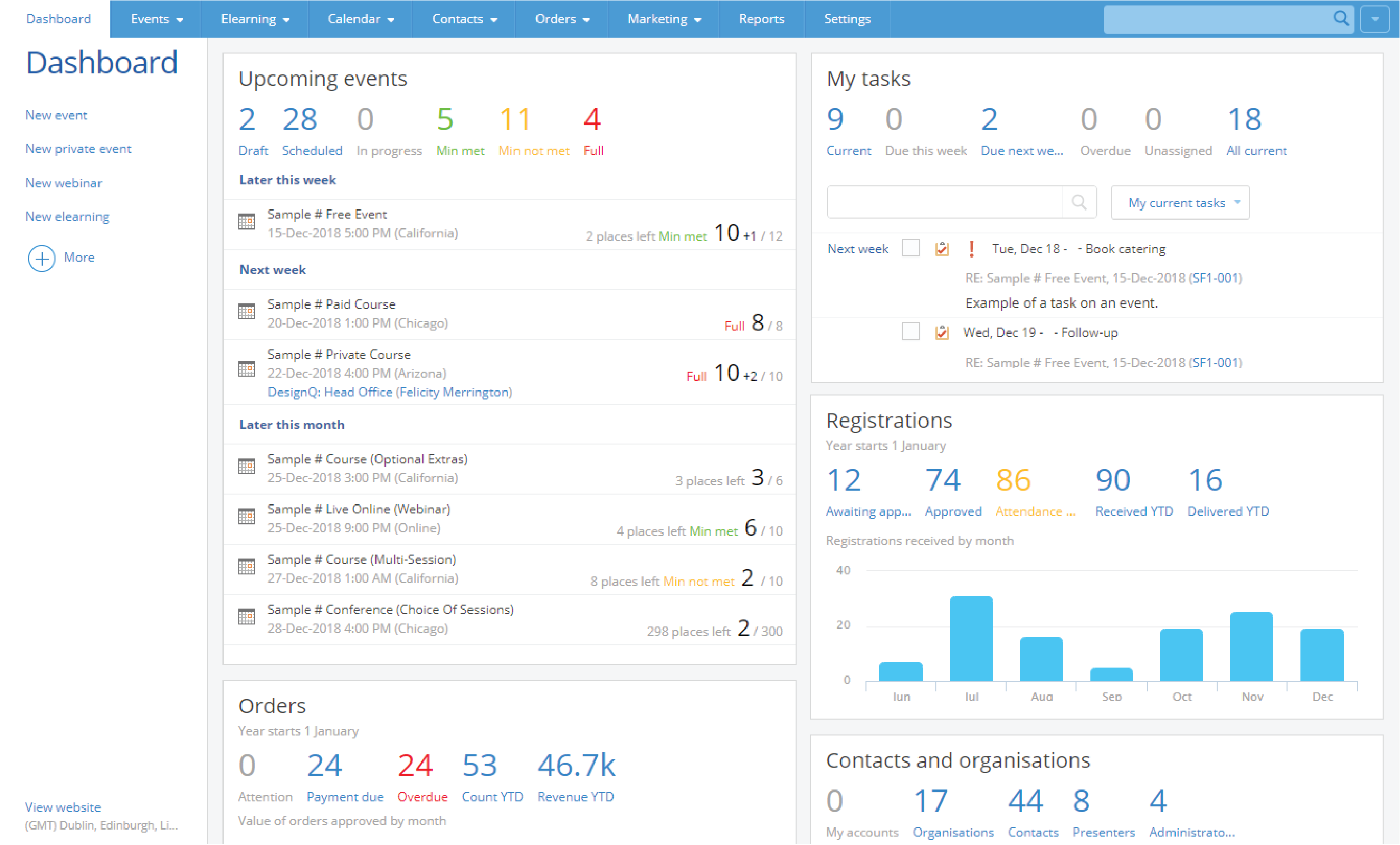
Features:
- Add a new user
- Archive users
- Manual grading ("Marking")
- Course history
- Gradebook
- Multiple grading scales
- Assignments engine
- Built-In authoring tool
- Can reuse PPTs, PDFs, Videos
Pros:
- Interface That Is Easy to Use: It simplifies design for a smooth and hassle-free user experience.
- Flexible Courses– It has flexible tools to design personalized learning content.
- Mobile-Friendly Interface: It is optimized for seamless access on mobile devices.
Cons:
- Limited Reporting: It has basic reporting features that may not cover in-depth analytics needs.
- High Cost for Small Businesses: Its pricing structure might be prohibitive for smaller organizations.
Pricing:
| Plans | Monthly |
| Simple | $105 |
| Professional | $170 |
| Enterprise | $240 |
| Scale | Talk to sales |
Customer Rating (Review Platforms):
- G2: 4.5 stars
- Capterra: 4.6 stars
- Trustpilot: 4.4 stars
Expert Take:
Arlo is ideal for training providers, course sellers, and professional education businesses running public or private classes. However, it’s not the best fit for HR teams focused primarily on employee onboarding.
3. eLoomi
eLoomi offers a performance management and learning platform designed to help businesses enhance employee growth. Companies can create tailored training content, set clear goals, and track progress. The platform streamlines feedback, encourages skill development, and improves overall employee engagement and productivity.
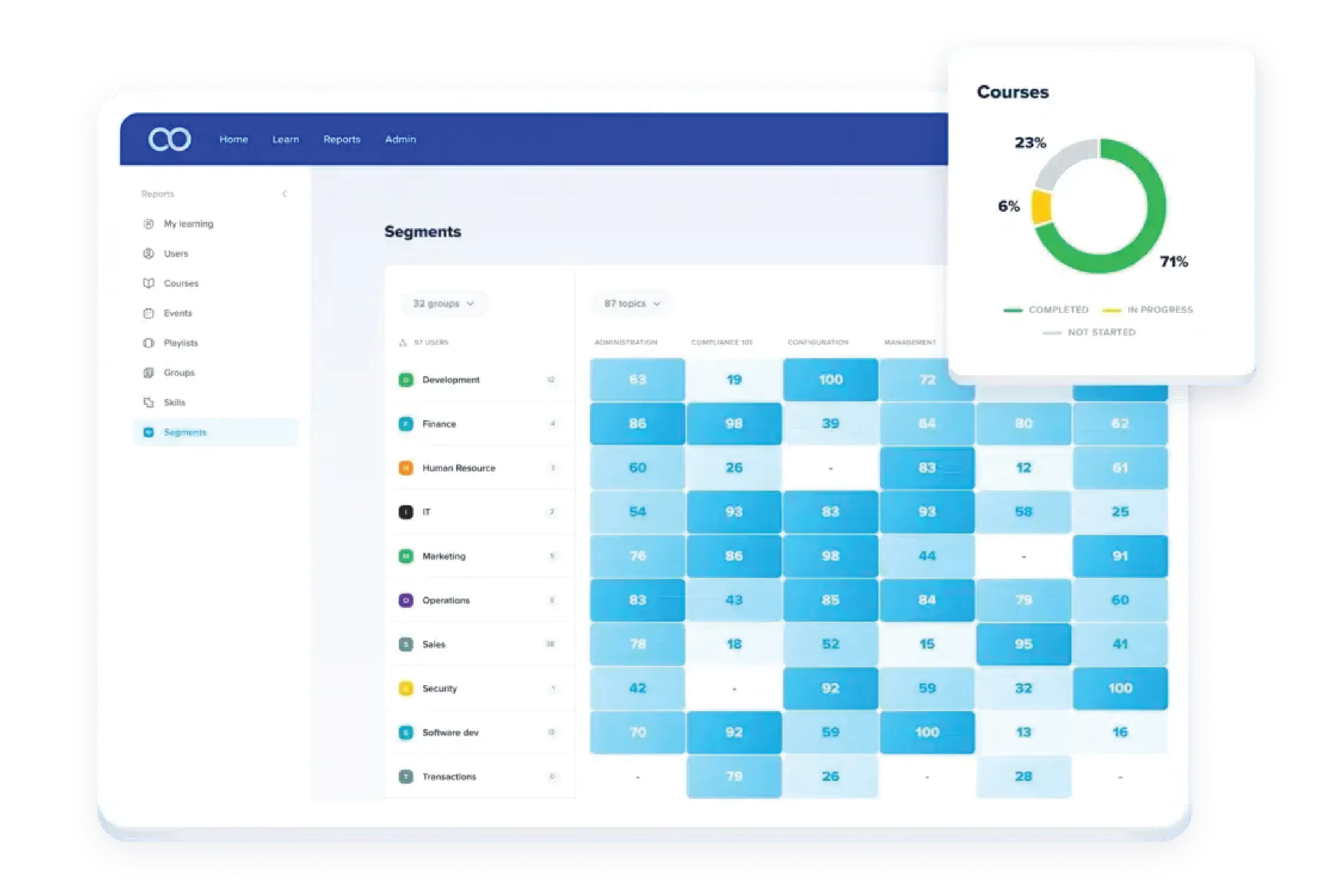
Features:
- Browse the list of users
- Bulk user actions
- Custom/Mandatory user profile fields
- Create new Categories
- Manage categories
- Priced categories (Bundle)
SAML2/API integration
Pros:
- Personalized Interface: It has customizable layouts tailored to individual preferences.
- Adaptable Learning Paths: It provides flexible learning journeys that can be adjusted as needed.
- Performance Tracking Tools: It delivers comprehensive tools to monitor and measure progress effectively.
Cons:
- Slow Mobile App: It has performance issues that may lead to delays and a less responsive user experience on mobile devices.
Pricing:
| Plans | Monthly |
| Play | $2.5/user |
| Plus | $9.1/user |
| eLoomi One | $9.1/user |
Customer Rating (Review Platforms):
- G2: 4.5 stars
- Capterra: 4.6 stars
- Trustpilot: 4.4 stars
Expert Take:
eloomi is ideal for mid-market and enterprise teams seeking to combine learning and performance management. However, it's not best for small teams needing basic onboarding, and mobile app issues affect frontline workers relying on phones
4. LearningCart
LearningCart is an online training management software designed to help businesses create and deliver training programs. It offers e-commerce features that allow organizations to sell courses, track student progress, and manage certifications.
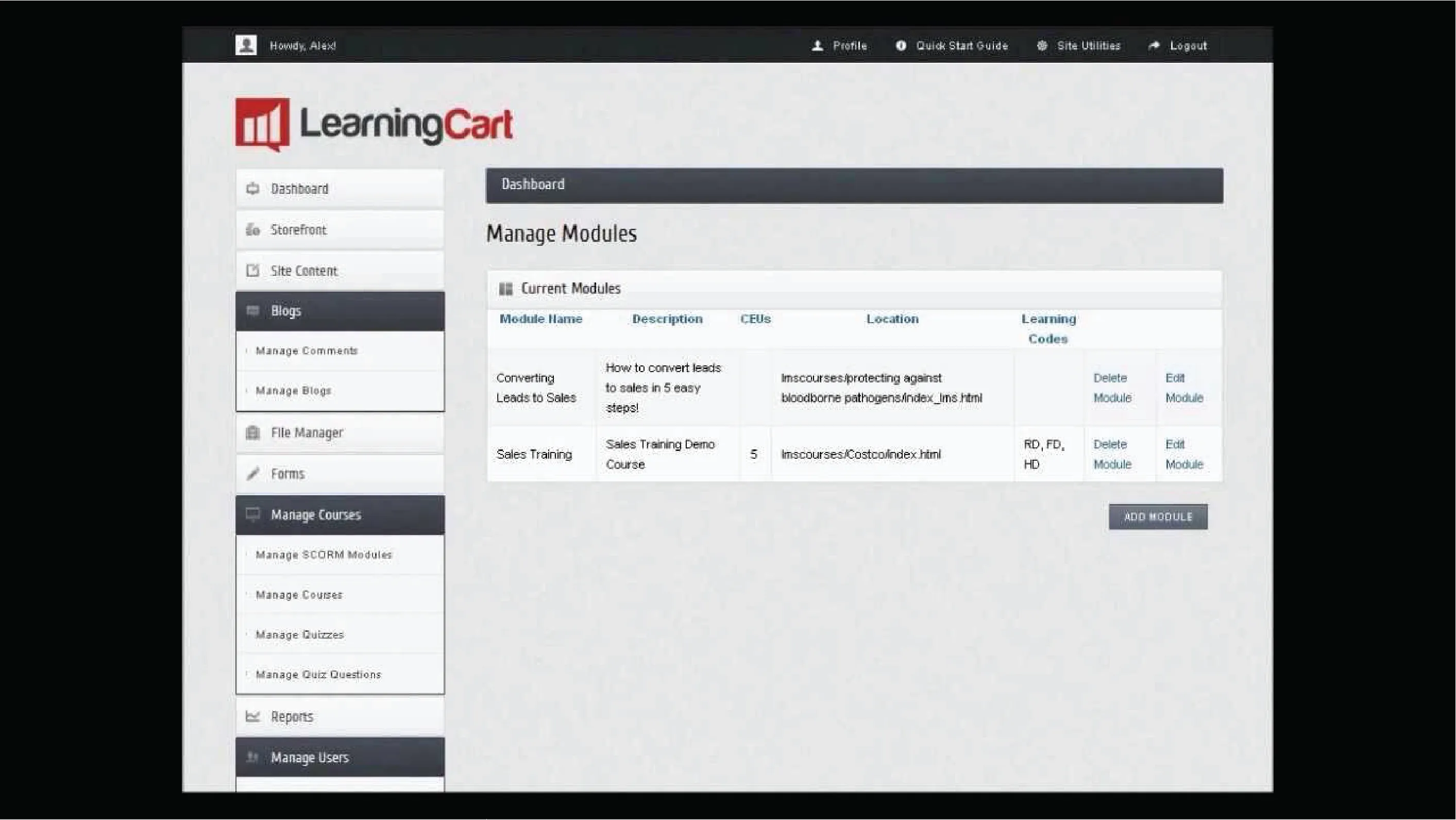
Features:
- SAML2/API integration
- Self-Registration
- Self-registration w. admin confirmation
- Survey engine
- Tests engine
- Upload courses
- Asynchronous self-paced
- Blended learning
Pros:
- E-Commerce Setup: It has integrated tools to create and manage a course marketplace.
- Customizable Course Styles: The platform has flexible design options to match course content and branding.
- Easy-to-Use Design: It has an intuitive interface for effortless navigation and usability.
Cons:
- Complex Initial Setup: It has a setup process that may require time and effort to configure and personalize.
Pricing:
| Plans | Monthly |
| Silver | $399 |
| Gold | $829 |
| Platinum | $1199 |
| Enterprise | Talk to sales |
Customer Rating (Review Platforms):
- G2: 4.5 stars
- Capterra: 4.6 stars
- Trustpilot: 4.2 stars
Expert Take:
LearningCart is ideal for organizations offering online training, certifications, or subscription courses. Its e-commerce and self-registration features support course marketplaces, but it’s less suitable for teams training only internal employees.
5. Absorb
Absorb is a cloud-based learning management software that helps businesses design, deliver, and track employee training. It offers tools for creating customized courses, automating content delivery, and monitoring learner progress. With its reporting features, organizations can optimize training strategies and improve employee performance.
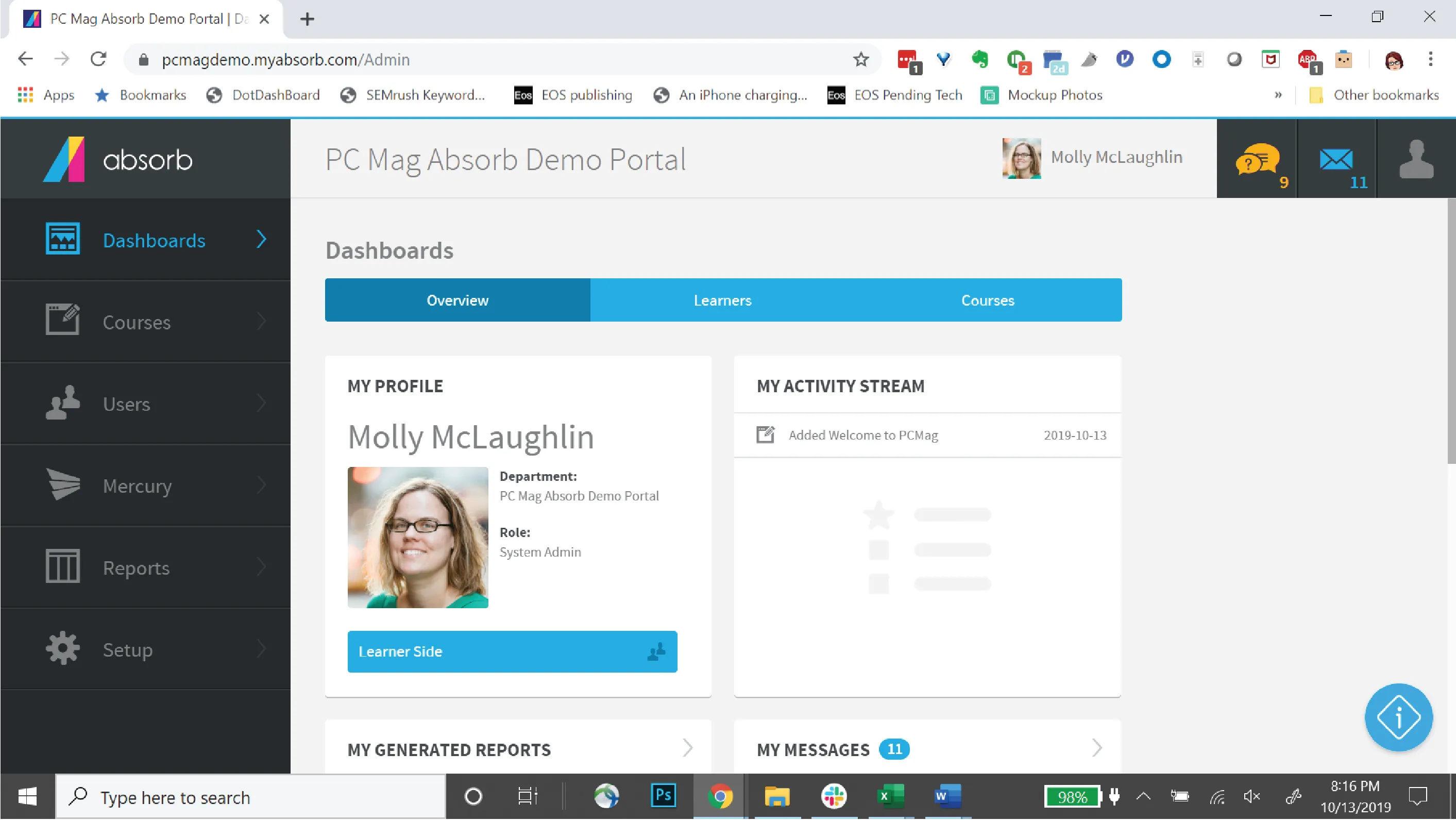
Features:
- Learner engagement
- E-commerce setup
- Reporting
- Mobile app
- Content Library
- Scorm compliance
Pros:
- Easy-to-Use Design: It has a user-friendly interface ensuring seamless navigation and experience.
- Personalizable Reporting and Data: It provides customizable reports and data views to meet specific business needs.
Cons:
- Higher Costs for Small Businesses: Smaller businesses may find the hire pricing of the platform to be a challenge.
Pricing:
Our research did not reveal any pricing details for Absorb. To obtain pricing information, please reach out to their sales team.
Customer Rating (Review Platforms):
- G2: 4.4 stars
- Capterra: 4.5 stars
- Trustpilot: 4.3 stars
Expert Take:
Absorb LMS is perfect for mid-sized and enterprise organizations seeking scalable employee training and compliance tracking. Its AI-powered learning paths and strong reporting aid HR and L&D leaders, but small businesses may struggle with rising costs.
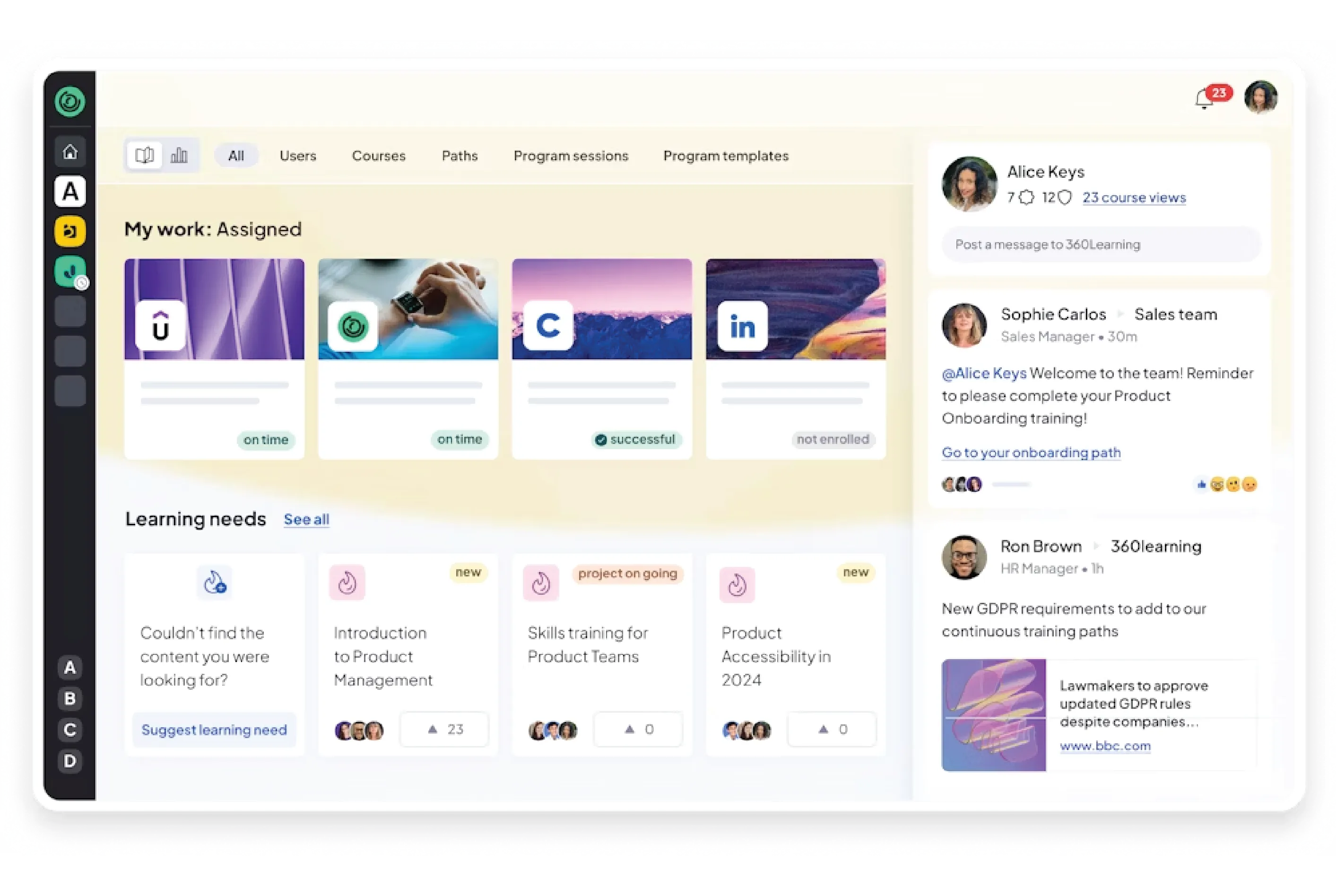
6. 360Learning
360Learning is a top-rated LMS for collaborative learning that lets teams make and share training materials. It has both LMS and social learning features, making it perfect for corporate training and employee growth.
Features:
- Certificate expiration notifications
- Certification expiration management
- Create new Categories
- Manage Categories
- Priced Categories (Bundle)
- Mobile Learning Support
- Personalized views
Pros:
- Group Learning Features: It offers collaborative tools and features designed to support group-based learning.
- User-Friendly Tools: It is simple and intuitive for building and organizing courses with ease.
- Seamless Integrations: It offers effortless connections with other platforms and tools for enhanced functionality.
Cons:
- Limited Reporting Options: It lacks in-depth or complex reporting features for detailed analysis.
Pricing:
| Plans | Monthly |
| Team | $8 |
| Business | Talk to sales |
Customer Rating (Review Platforms):
- G2: 4.6 stars
- Capterra: 4.7 stars
- Trustpilot: 4.4 stars
Expert Take:
360Learning is effective for collaborative learning, focusing on peer-to-peer knowledge sharing to enhance employee development. Tech companies and remote organizations benefit from its social learning and efficient content creation, but it may not suit compliance-focused training needs.
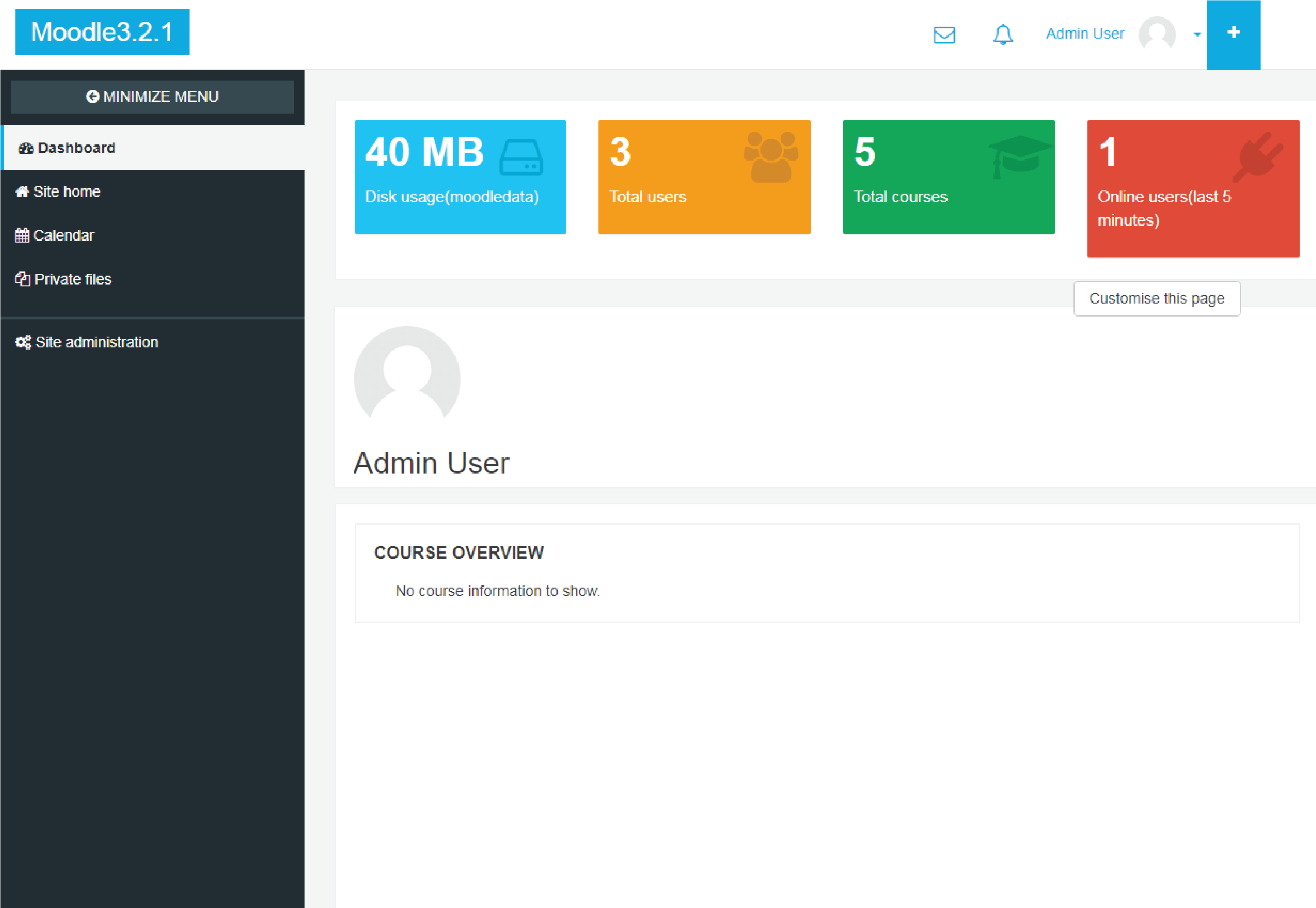
7. Moodle
Moodle, is an open-source learning management software that allows businesses and institutions to create and deliver online training content. It offers flexibility for customization and integrates with a wide range of apps and tools. This enables organizations to tailor their learning programs to meet specific needs and enhance the training experience.
Features:
- Enhanced learning and teaching efficiency through AI
- 160+ language supported
- Mobile friendly
- Gamification
- Full Data control and transparency
- Complete ownership and control
Pros:
- Open Source and Easy to Customize: It is a fully customizable platform with open-source flexibility to meet unique needs.
- Wide Range of Plugins: It offers a broad selection of plugins to enhance functionality and integration.
- Dedicated Support: It provides access to specialized support to assist with any issues or queries.
Cons:
- Challenging for First-Time Users: It may require a learning curve for new users to fully grasp its features.
- Technical Expertise Required for Customization: To customize the platform you may need specialized technical knowledge.
Pricing:
| Plans | Monthly |
| Starter | AUD 200 |
| Mini | AUD 340 |
| Small | AUD 630 |
| Medium | AUD 1450 |
| Standard | AUD 2750 |
Customer Rating (Review Platforms):
- G2: 4.2 stars
- Capterra: 4.3 stars
- Trustpilot: 4.0 stars
Expert Take:
Moodle is perfect for educational institutions and nonprofits seeking a customizable platform. Organizations with technical teams enjoy its flexibility. However, those lacking IT resources may struggle with setup and ongoing maintenance compared to simpler cloud-based options.
8. Docebo
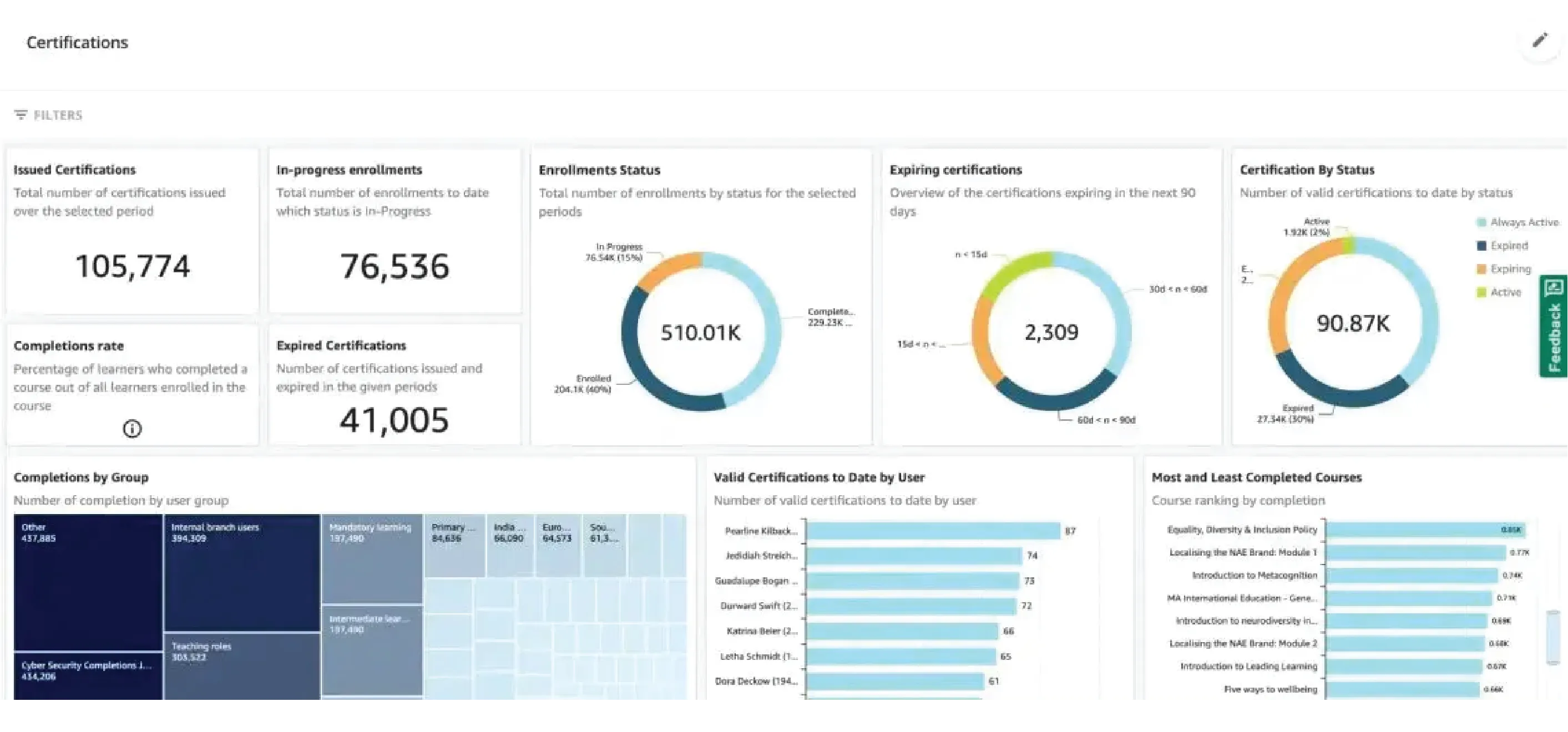
Docebo, founded in 2005 and headquartered in Toronto, is a cloud-based learning management software designed to enhance employee training. It provides tools for creating interactive courses, tracking learner progress, and enabling collaboration. With its scalable features and integrations, Docebo helps businesses streamline training and improve engagement.
Features:
- Active Directory/LDAP integration
- Custom user login page
- Manual accounts
- Unique certificate by course
- Unique certification by curriculum
- SAML2/API integration
- Self-Registration
Pros:
- Tools for Personalized Courses: It has flexible features to create customized learning experiences for each learner.
- Easy-to-Use Interface: It has an intuitive design for seamless navigation and user interaction.
- Effortless Integrations: It offers quick and simple integration with other HR platforms for enhanced functionality.
Cons:
- Limited Reporting and Analytics Tools: It offers basic reporting and analytics features that may not provide in-depth insights.
- Initial Navigation Challenges: New users may experience difficulty navigating the platform at first.
Pricing:
Our research did not reveal any pricing details for Decobe. To obtain pricing information, please reach out to their sales team.
Customer Rating (Review Platforms):
- G2: 4.3 stars
- Capterra: 4.4 stars
- Trustpilot: 4.2 stars
Expert Take:
Docebo is ideal for enterprises emphasizing personalized learning and AI-driven training. Large organizations in technology and consulting gain from its automation. In contrast, smaller businesses may find pricing and implementation difficult for basic training needs.
9. iSpring Learn
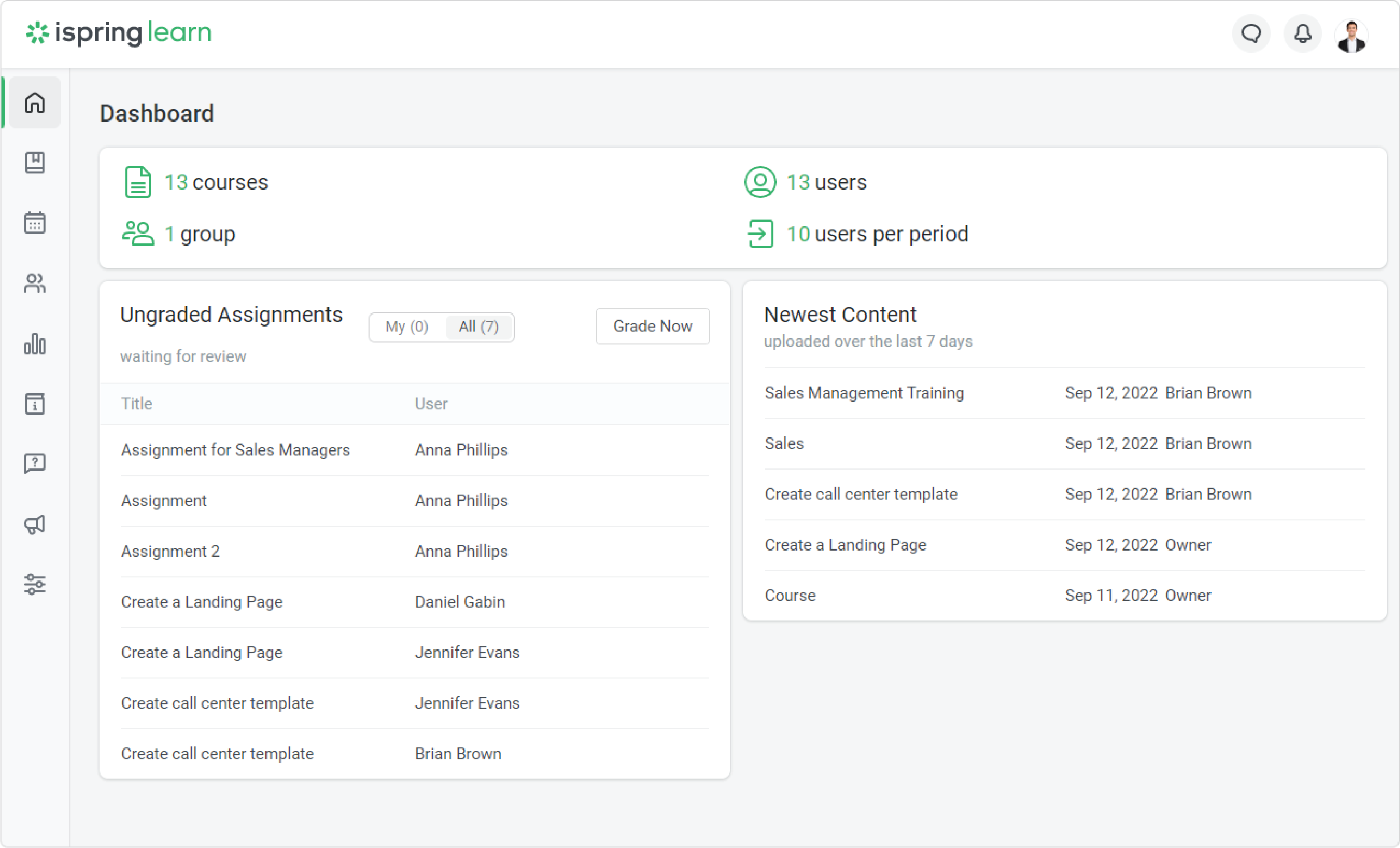
iSpring Learn is a cloud-based learning management system that helps businesses create, deliver, and track employee training. With its user-friendly interface, companies can design engaging courses, monitor progress, and generate detailed reports. The platform’s robust analytics allow businesses to optimize training effectiveness and improve workforce development.
Features:
- Multiformat support
- SCORM support
- Unlimited storage
- Detailed reporting
- Customizable interface
- Unlimited administrators
- Events Calendar
- Quiz and Simulation Reports
Pros:
- Easy-to-Use Design: It offers an intuitive and user-friendly interface for effortless navigation.
- Strong Analytics and Reports: It has advanced tools for in-depth analysis and insightful reporting.
- Works on Phones: It is fully optimized for mobile devices, providing seamless functionality on the go.
Cons:
- Limited Integrations: It has fewer options for connecting with external tools and platforms.
Pricing:
| Plans | Monthly |
| iSpring Suite | $770/ per user |
| iSpring Suite Max | $970/per user |
| iSpring Suite Premium | $1,970/ per user |
Customer Rating (Review Platforms):
- G2: 4.6 stars
- Capterra: 4.7 stars
- Trustpilot: 4.5 stars
Expert Take:
iSpring Learn is ideal for organizations that need quick course creation and easy training delivery. It helps HR teams shift from PowerPoint to digital learning, particularly in mid-sized sales and support companies. However, it may lack advanced features for larger organizations.
10. LearnUpon
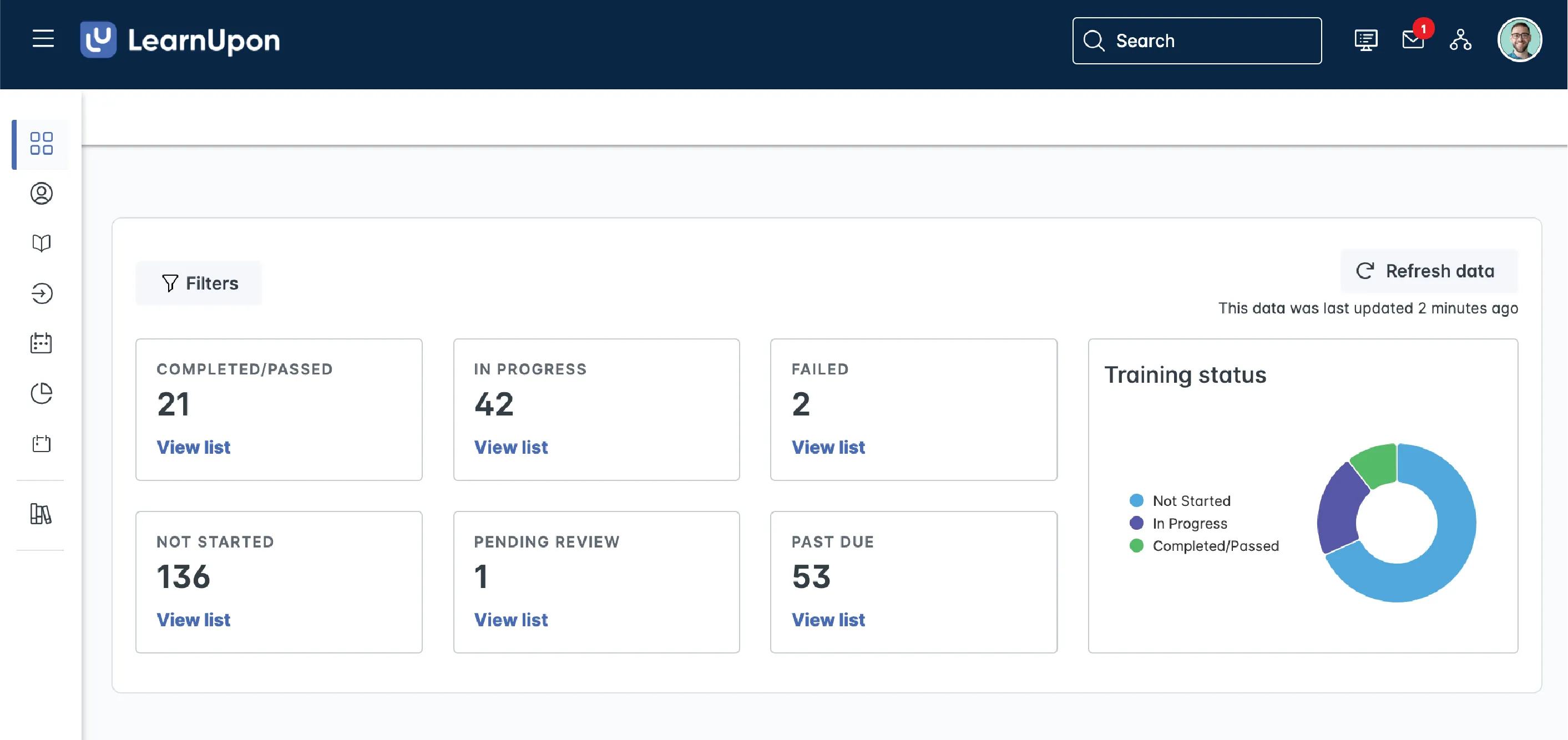
LearnUpon is a cloud-based business training software that enables firms to train and track personnel. Its interface is simple, and its course, reporting, and platform integration capabilities are robust.
Features:
- Browse the list of users
- Bulk User Actions
- Custom/Mandatory user profile fields
- Course history
- Gradebook
- Manage certification templates
- Predefined certification templates
Pros:
- Great Support: It has responsive and helpful customer service.
- Strong Analytics and Reports: It offers comprehensive reporting and analytics tools for detailed insights and decision-making.
- Support for Multiple Languages: It has multilingual capabilities to accommodate a diverse user base.
Cons:
- High Cost for Small Businesses: Its pricing may be too steep for smaller businesses with limited budgets.
Pricing:
Our research did not reveal any pricing details for LearUpon. However, you can contact their sales team for pricing information.
Rate by Customers (Review Platforms):
- G2: 4.5 stars
- 4.6 stars from Capterra
- 4.4 stars on Trustpilot
Expert Take:
LearnUpon is ideal for mid-sized and enterprise companies managing training across regions. Its multilingual support and robust reporting tools benefit global organizations. However, small businesses may find its pricing challenging for basic onboarding and internal learning needs.
11. Thrive
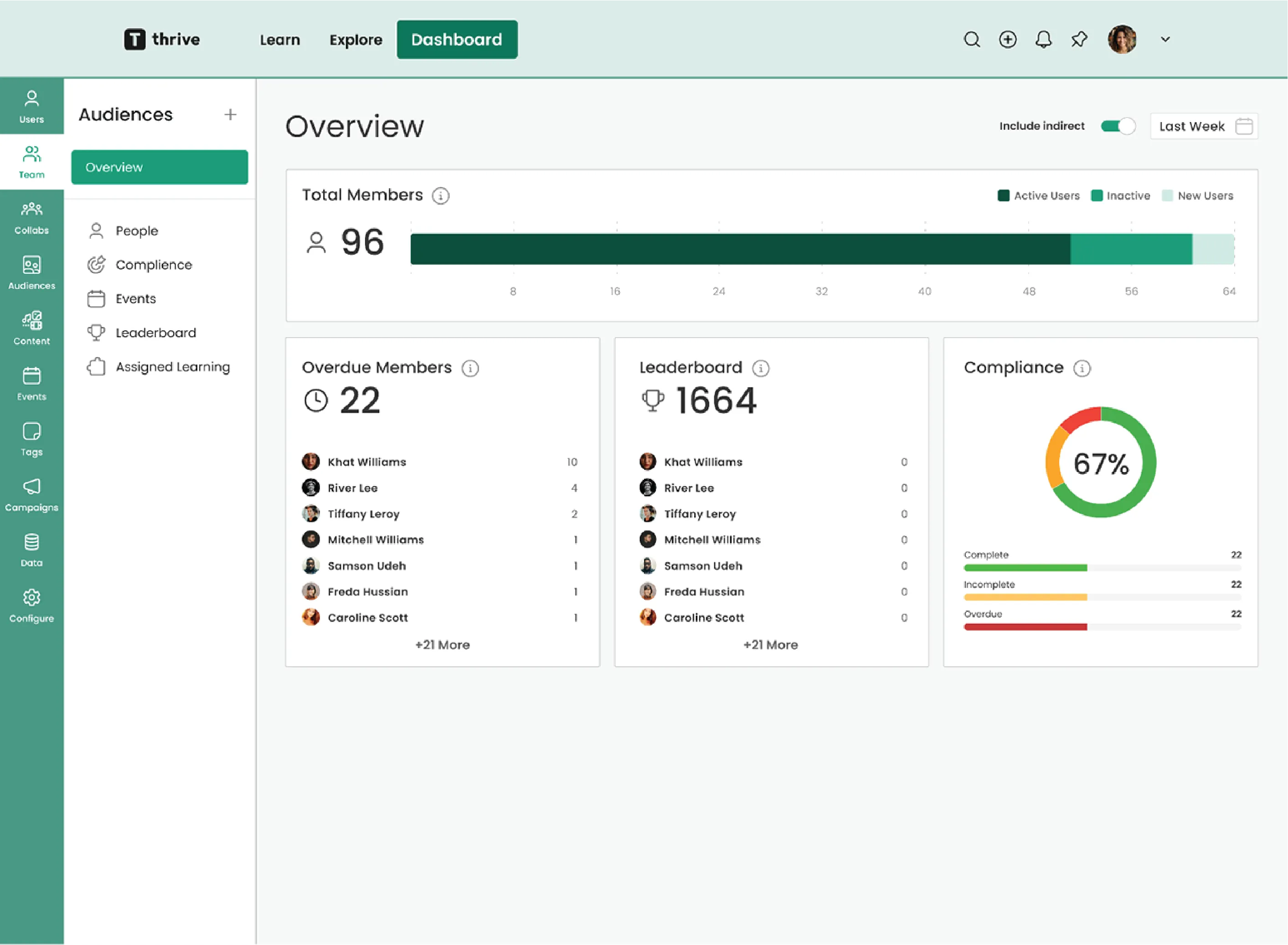
Thrive is an employee training management software that helps firms plan, execute, and track staff training. It offers tools for creating courses, facilitates learning with colleagues, and tracks achievement to support employee growth.
Features:
- Content libraries
- Assessments and practice
- Content delivery and tracking
- Social learning
- Assessments and practice
- Manager portals
Pros:
- Updated Content: It offers regularly refreshed learning materials to ensure relevance and accuracy.
- Strong Analytics and Reports: It has advanced tools for in-depth analysis and actionable insights.
- Features for Social Learning: It provides collaborative tools that encourage interaction and learning within communities.
Cons:
- Expensive for Small Businesses: The pricing may be prohibitive for smaller businesses with tighter budgets.
Pricing:
| Plans | Monthly |
| Standard (Starting) | $19650/1-150 Employees |
| Custom | Contact sales |
Customer Rating (Review Platforms):
- G2: 4.5 stars
- 4.7 stars on Capterra
- 4.4 stars on Trustpilot
Expert Take:
Thrive is ideal for companies desiring modern learning experiences that emphasize knowledge sharing and employee engagement. It works well for digital-first businesses and creative industries, but small businesses may struggle with pricing and advanced feature usage.
12. HowNow
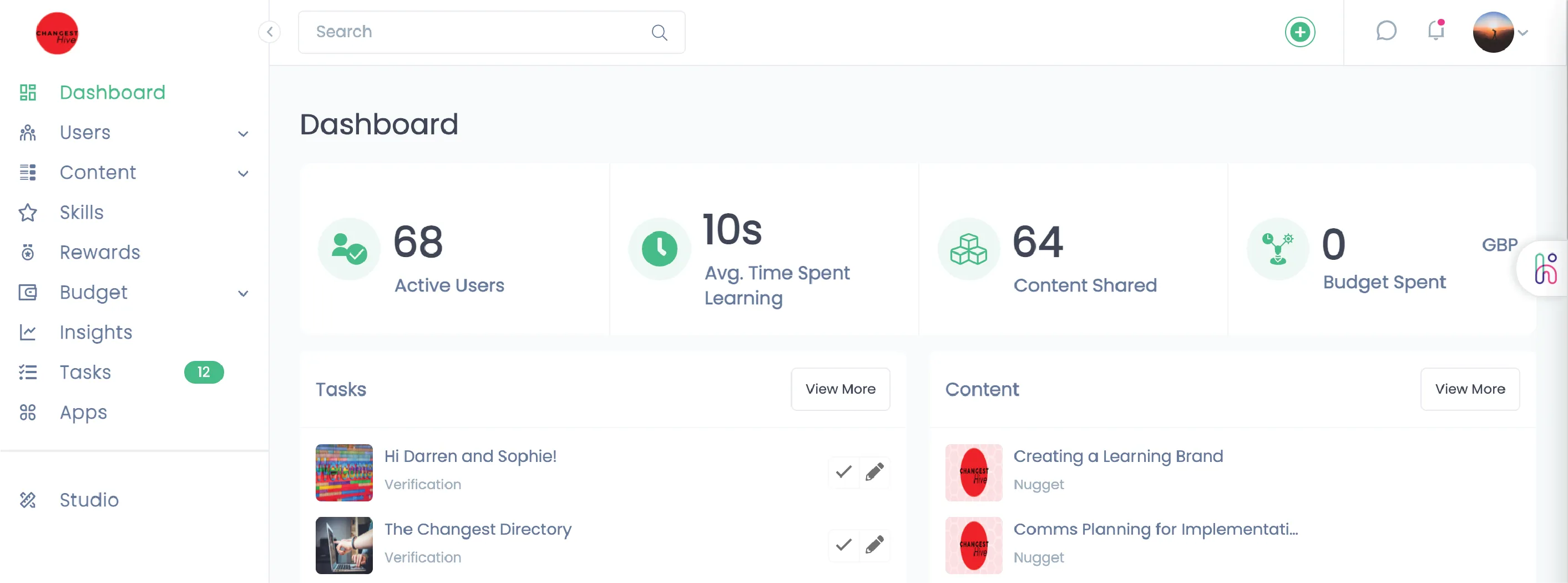
HowNow is a modern training management tool made to help employees learn and grow. It has tools like on-demand content, social learning, and knowledge-sharing to help teams work better together and be more engaged.
Features:
- Browse the list of users
- Bulk user actions
- Assign courses to categories
- Create new categories
- Unique certificate by course
- SAML2/API integration
Pros:
- Interface That Is Easy to Use: It offers an intuitive design for seamless navigation and a smooth user experience.
- Customized Learning Paths: It has tailored learning journeys that adapt to individual needs and goals.
- Integration with Popular Tools: The tool works seamlessly with well-known platforms like Slack and Microsoft Teams for enhanced collaboration.
Cons:
- Limited Advanced Reporting Options: It lacks in-depth reporting features for detailed analysis.
- Limited Course Creation Tools: Some users find the option for creating course material to be restrictive.
Pricing:
| Plans | Monthly |
| Essential | £72/ Per User |
| Pro | £82/Per User |
Customer Rating (Review Platforms):
- G2: 4.7 stars
- Capterra: 4.6 stars
- Trustpilot: 4.5 stars
Expert Take:
HowNow is tailored for organizations wanting to centralize learning resources into one searchable hub. It integrates seamlessly with Slack and Teams, benefiting remote teams. However, enterprises needing advanced reporting or custom course-building might find it lacking.
13. SkyPrep
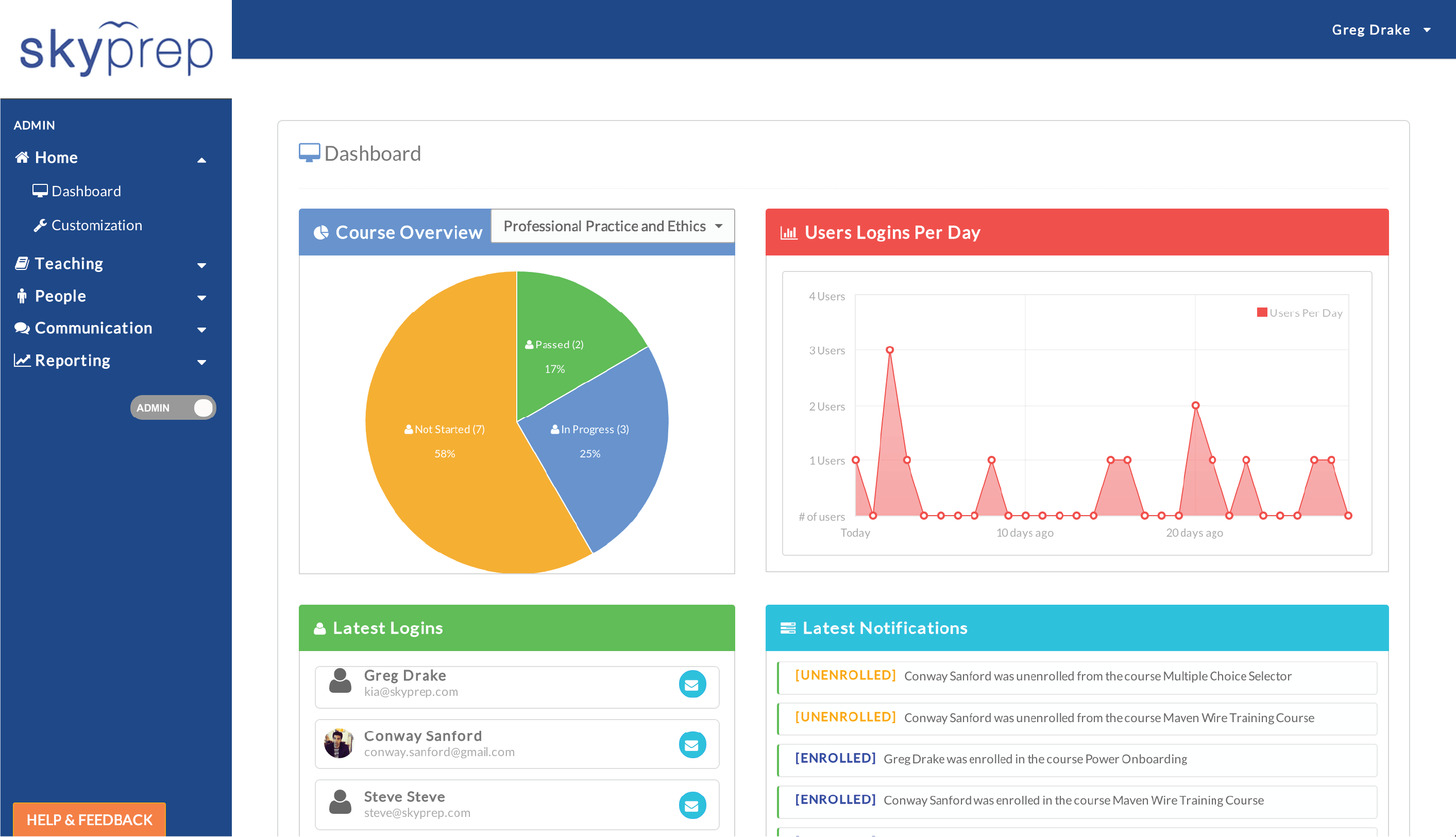
SkyPrep is a cloud-based software to manage training that simplifies training and hiring. It offers tools for course creation, progress tracking, and detailed reporting to improve training efficiency. With automation and intuitive dashboards, businesses can enhance learning experiences and ensure compliance effortlessly.
Features:
- Course creation
- User management
- Multi-tenant LMS
- Workflow automation
- Learning integrations
- AI Integrated
Pros:
- Easy Learner Engagement: It offers features designed to actively involve and motivate learners throughout their journey.
- Enterprise-Grade Security: It delivers robust security measures to ensure the protection of sensitive data and compliance with industry standards.
- Works on Smartphone: It is fully optimized for mobile devices, enabling seamless learning on the go.
Cons:
- Limited Customization: It has restrictive options for tailoring course layouts and structures to specific needs.
Pricing:
We couldn't find any pricing details for Skyprep in our research. For pricing information, please contact their sales team directly.
Customer Rating (Review Platforms):
- G2: 4.4 stars
- Capterra: 4.5 stars
- Trustpilot: 4.3 stars
Expert Take:
SkyPrep is an excellent option for businesses seeking automated training with low technical demands. It's ideal for compliance-focused industries and enhances efficiency for distributed teams, though it may lack flexibility for organizations needing extensive customization.
14. Zoho Training Management Tool
The Zoho Training Management Tool is the best training management software that makes it easier to train and grow employees. It lets companies create, run, and track training programs, ensuring that teams have comprehensive learning experiences.
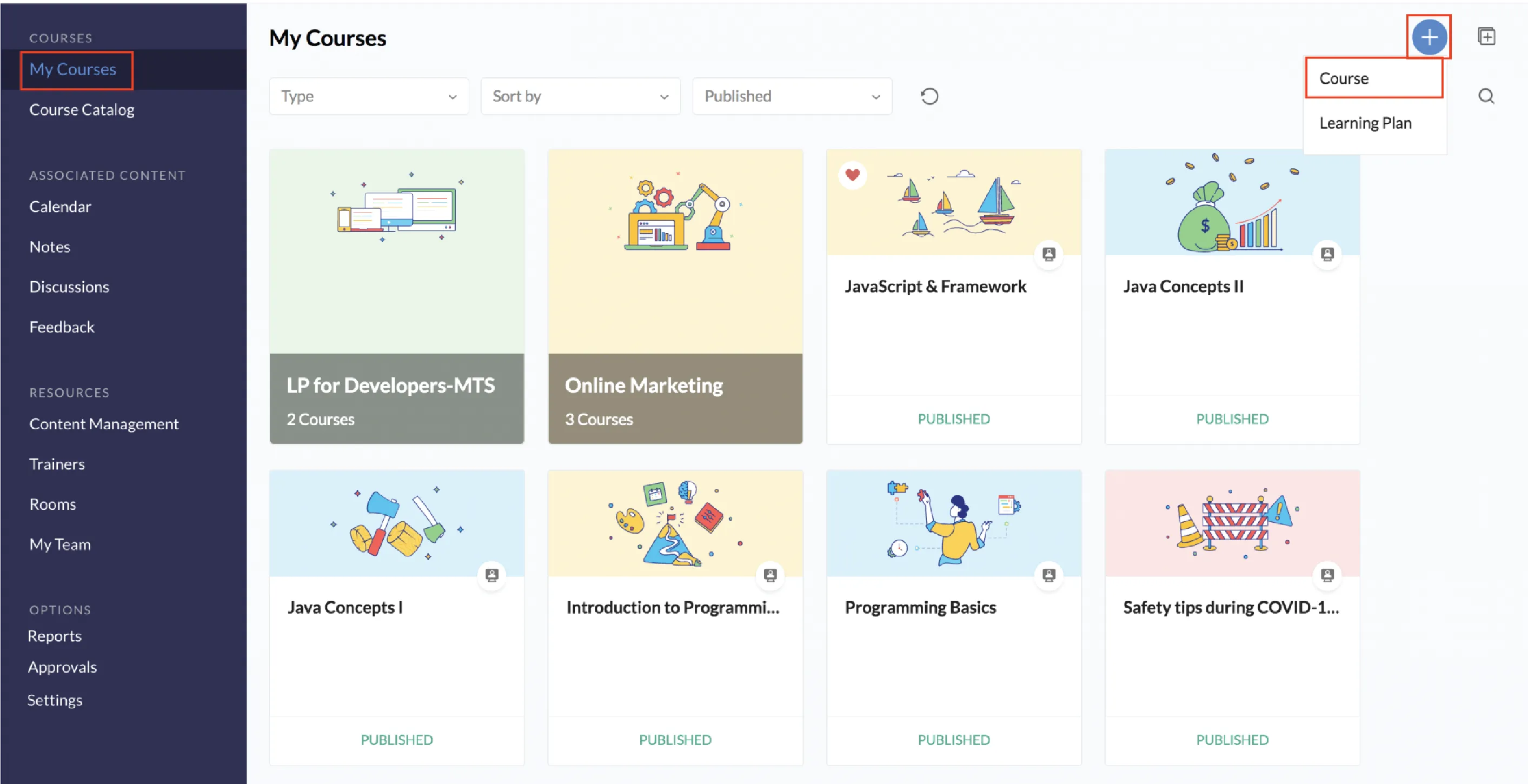
Features:
- Centralized knowledge hub
- Structured knowledge hierarchy
- Flexible content access
- Tailored learning programs
- Engaging, interactive content
Pros:
- Reliable Platform: It delivers consistent performance with minimal downtime for a seamless user experience.
- Tailored Course Creation: It offers tools designed to create courses that suit specific learning objectives.
- Integration with Zoho Tools: It can seamlessly integrate with other Zoho applications for enhanced functionality.
Cons:
- Limited Third-Party Integrations: It has fewer options for connecting with external platforms or services.
- Navigation Challenges: Some users experience difficulty navigating the platform, initially.
Pricing:
| Plans | Monthly |
| Essential HR | ₹48/user |
| Professional | ₹96/user |
| Premium | ₹144/user |
| Enterprise | ₹192/user |
| People Plus | ₹350/user |
Customer Rating (Review Platforms):
- G2: 4.3 stars
- Capterra: 4.4 stars
- Trustpilot: 4.1 stars
Expert Take:
Zoho Training Management Tool is ideal for small and mid-sized businesses within the Zoho ecosystem for HR, CRM, or operations. It provides affordability and centralized knowledge management, but enterprises may face limitations with advanced analytics.
15. SAP Litmos
SAP Litmos, founded in 2007 and headquartered in San Ramon, California, is a web-based training management software. It enables businesses to create, automate, and track employee training with real-time analytics. With mobile access and gamification, enhances engagement while ensuring scalable and efficient learning management.
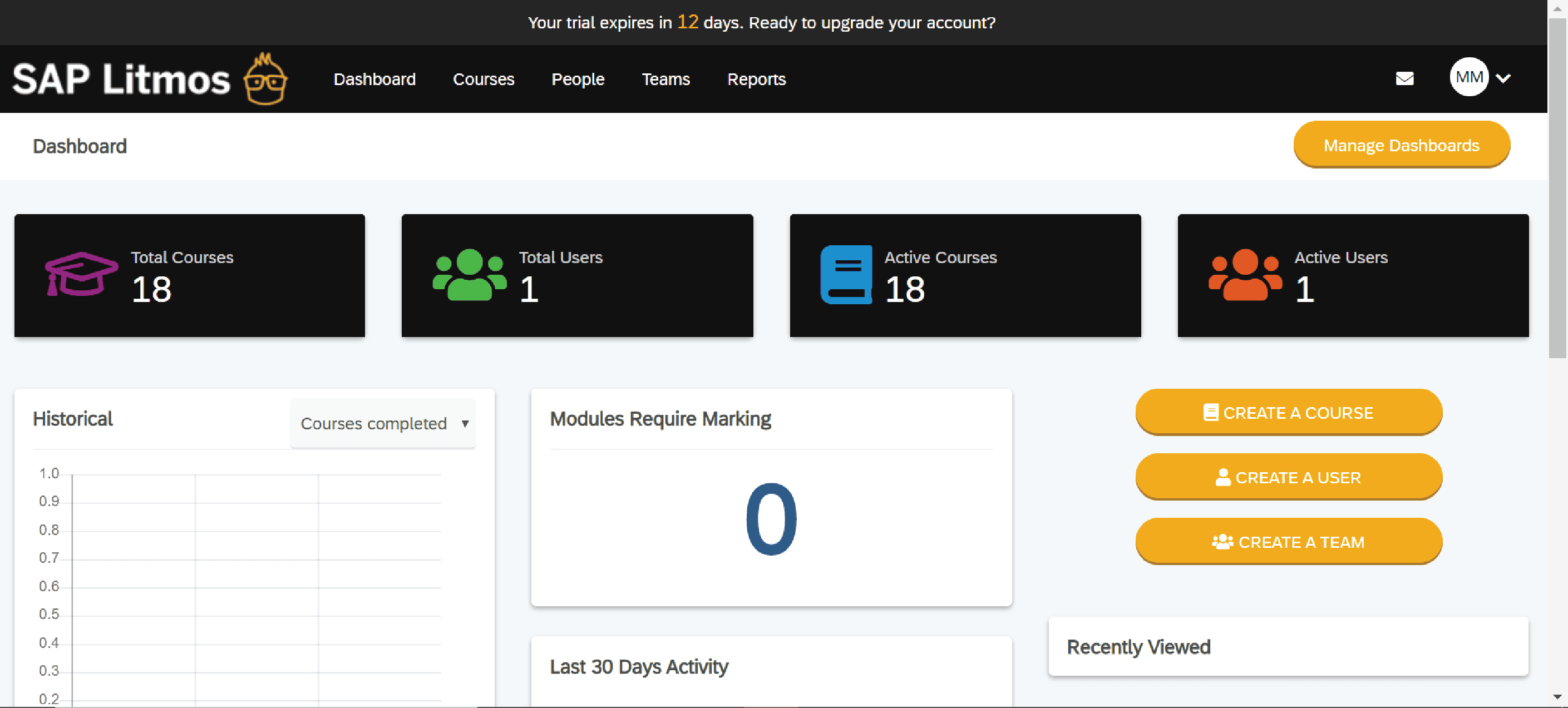
Features:
- Active Directory/LDAP integration
- Custom user login page
- Manual accounts
- Assign courses to categories
- Create new categories
- Manage Categories
- Intelligent recommendations
- Natural Language Processing
Pros:
- Quick Deployment and Simple Integration: It provides fast setup and seamless connection with existing systems.
- Strong Analytics and Reports: It delivers in-depth data insights and comprehensive reporting tools.
- Off-the-Shelf Content Library: It has ready-to-use content that can be easily accessed and deployed.
Cons:
- High Cost for Small Businesses: Its pricing may be challenging for smaller businesses with limited budgets.
- Subpar Reporting Tools: Some users feel the reporting features lack depth or sophistication.
Pricing:
| Plans | Monthly |
| Litmos LMS | $5.75 |
| Litmos Training Content | $4 |
Customer Rating (Preview Platforms):
- G2: 4.5 stars
- Capterra: 4.6 stars
- Trustpilot: 4.2 stars
Expert Take:
SAP Litmos caters to enterprises needing scalable compliance training and rapid content deployment. It benefits industries like healthcare, finance, and manufacturing. Yet, smaller companies may consider it too costly and complex compared to simpler LMS alternatives.
5 Benefits of Training Management Software
For businesses balancing growth, compliance, and employee development, these 5 benefits explain why training management software is now a strategic need:
1. Improves Employee Productivity and Performance
Training management software consolidates learning and bridges knowledge gaps, enabling faster information access. By clarifying processes, structured training improves workforce productivity, and automation allows teams to concentrate on strategic growth opportunities.
2. Reduces Administrative Work for HR Teams
Manual training coordination takes up considerable HR time for scheduling and compliance. Training management platforms automate these tasks, reducing errors and enhancing visibility, allowing HR to concentrate on strategy and talent development.
3. Strengthens Compliance and Certification Tracking
Industries like healthcare, finance, and manufacturing require ongoing compliance training. Training management software automates reminders and tracks completion, reducing risks and ensuring efficiency, particularly for businesses operating across various regions.
4. Supports Continuous Employee Development
Employees today expect career advancement and skill development support. Training management software provides personalized learning paths and continuous upskilling, enhancing engagement and retention, which are vital for stability in competitive markets.
5. Creates Scalable Learning for Distributed Teams
Remote and hybrid work models require a centralized learning infrastructure for businesses. Training management software ensures consistent onboarding, compliance training, and skill development, while scalable systems facilitate faster onboarding and maintain quality during rapid growth.
How to Choose Training Management Software?
To choose the right training management software, start with understanding which features directly impact adoption, scalability, reporting, and long-term workforce development success:
1. Prioritize Ease of Adoption Across Teams
Select software that employees and managers can easily adopt without extensive training. Intuitive dashboards, mobile access, and straightforward workflows enhance engagement, improving course completion rates and participation compared to complex systems needing constant support.
2. Evaluate Integration Capabilities Early
Your training management software should connect effortlessly with HR systems, ATS, and payroll tools. Strong integrations reduce manual entry and errors while enhancing visibility, allowing for a scalable learning ecosystem with minimal administrative overhead.
3. Assess Reporting and Analytics Depth
Modern HR leaders need actionable learning data beyond simple course completion reports. Evaluate if the platform provides insights into engagement, skill gaps, and onboarding. Data-driven strategies facilitate faster workforce decisions and enhance compliance for growing organizations.
4. Match the Platform to Your Company Size and Goals
Not every LMS suits all organizations. Small businesses prioritize quick implementation and cost, whereas enterprises need scalability and compliance. Clearly define your focus on onboarding, training, or upskilling to avoid overspending on unnecessary features or facing operational limitations.
5. Consider Long-Term Scalability and Support
As businesses grow or shift to hybrid models, training needs change. Choose software that scales with employee growth and multilingual learning. Assess vendor support, customer feedback, and onboarding resources before making a long-term investment decision.
Summary: Boost Employee Performance With The Right TMS
Without the right tools, training can become a bottleneck for businesses. Using the best learning management software, such as Moodle, SAP Litmos, Decobe, and more, you can save up to 40% of your time.
This allows you to focus on growth and stay ahead of competitors. Now that you have a comprehensive understanding of all the right TMS, go on and choose the one that suits your business needs.
Frequently Asked Questions
1. Which LMS is the most popular?
There are several popular LMS including Blackboard Learn, Thrive, HowNow and more. Many industries use them to teach and grow.
2. What is TMS vs LMS?
TMSs handle every part of a training company, from enrollment to billing to customer relationship management (CRM). LMSs are used by training companies that want to offer online learning that people can do at their own pace.
3. Which is better: Moodle or Blackboard?
Moodle and Blackboard are learning management systems (LMS), but they are different. Blackboard is paid software, while Moodle is free and open source. Moodle is better for making changes and working together, while Blackboard is better for setting up big courses.