














iCIMS is a cloud-based enterprise talent acquisition platform, branded as the iCIMS Talent Cloud, unifying applicant tracking, candidate relationship management, career sites, onboarding, and an expanding set of AI agents.
- Primary Features: iCIMS Hire (ATS), Frontline AI, an AI Sourcing Agent under the Coalesce AI umbrella, candidate engagement and text recruiting, career sites and employer branding, onboarding, and advanced reporting and analytics.
- Starting Price: Pricing is quote-only and not published. Independent buyer data puts the average contract around $20,781 per year, with a documented range from $14,500 to $635,000 depending on scope.
- Best For: Large enterprises, especially those hiring high volumes of frontline or hourly workers, that need a connected ATS, CRM, and AI recruiting stack under one platform.
- Not Ideal For: Small or mid-sized teams that want fast setup, predictable pricing, or a simpler interface without a steep configuration learning curve.
- Integration: Teams integrate Skima AI with iCIMS to screen new applicants, rediscover past candidates who fit new openings, and score every match with clear, explainable reasoning with compliance, all without replacing iCIMS.
iCIMS has built its name as the enterprise ATS built for scale, the platform large, complex hiring teams turn to when a smaller tool won't hold up. That reputation still stands, but recruiting has moved fast enough this past year that scale alone doesn't say much anymore.
I evaluated the iCIMS platform and every major feature, identified patterns from thousands of verified user reviews, and highlighted where iCIMS meets expectations and where it slows recruiters and HRs down instead of helping them. Let's get started.
What Is iCIMS?
iCIMS is a cloud-based, enterprise-grade talent acquisition platform, marketed as the iCIMS Talent Cloud, built to help large organizations attract, engage, hire, and advance candidates at scale. Colin Day founded the company in 2000, and it is now led by Marc Thompson, who became CEO in May 2026 after Jason Edelboim's departure.
iCIMS Features Review: Breaking Down Every Module
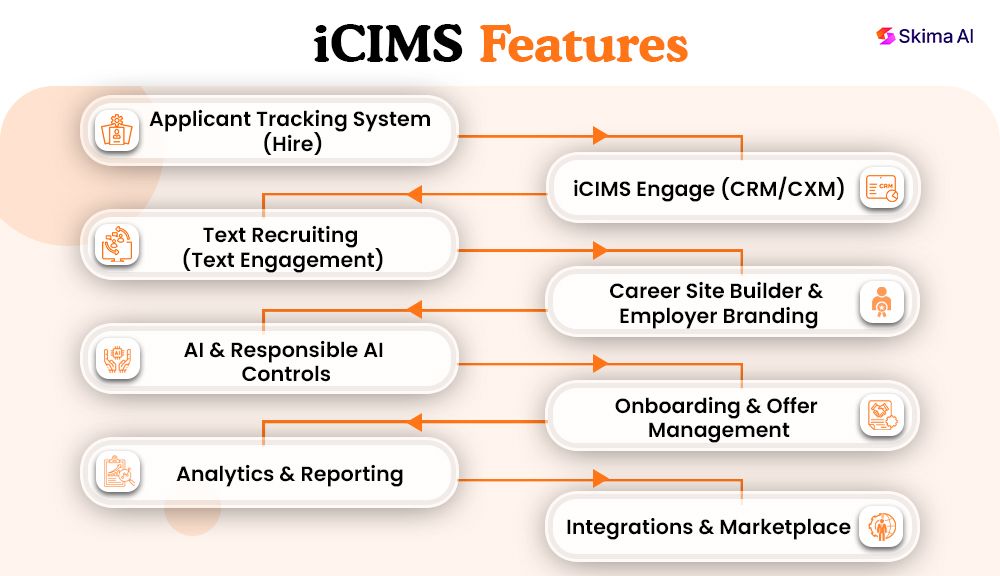
iCIMS organizes its product around the core ATS (iCIMS Hire), candidate engagement and CRM tools, career sites, onboarding, reporting, and an expanding Coalesce AI that covers sourcing, matching, and engagement. Below is my honest evaluation of each feature, highlighting what it does well and where it still has limitations:
Applicant Tracking System (iCIMS Hire)
Requisition creation, configurable workflows, resume parsing, and interview scheduling all exist within iCIMS Hire. A personalized recruiter dashboard displays upcoming interviews, open jobs, and time-to-fill metrics without needing separate reports.
What stood out most while reviewing this module is the configurability it offers for complex, multi-stage approval chains. This is important when more than one hiring manager or region is involved.
However, that same configurability comes with a tradeoff. The initial setup requires thorough training before a recruiter can be fully productive. Additionally, workflow changes often need platform-specific expertise instead of a quick self-service fix. For a company with dedicated recruiting operations, this cost is manageable. For a leaner team, it creates ongoing friction.
Frontline AI
Frontline AI addresses a clear problem identified by iCIMS's research: 91% of frontline hiring managers see filling roles as urgent, yet over half of candidates abandon their applications before completion.
The product provides a 24/7, AI-led conversational experience through SMS, WhatsApp, and the web. It guides applicants through job discovery, application, and interview scheduling in one mobile-first flow instead of a multi-step form.
Trigger-based automation helps move candidates through various stages, including offer acceptance and interview scheduling. Instant notifications and candidate self-scheduling replace the need for manual follow-up.
iCIMS reports reductions of up to 75% in time to fill positions and claims up to 10 times more hires per recruiter for hourly roles specifically. These figures come from the company itself, and I would consider them a ceiling rather than a typical outcome until independent, published case data becomes available following this recent launch.
AI Sourcing Agent & Coalesce AI
Coalesce AI is iCIMS's umbrella brand for its agentic layer. The AI Sourcing Agent was the first agent to be introduced under this brand. A recruiter activates the agent for a specific, high-impact role. It searches existing talent pools for strong matches, including silver medalists and dormant profiles. The agent then scales outreach using pre-approved templates, so the recruiter doesn't have to draft each message manually.
iCIMS supports the underlying AI with a TrustArc Responsible AI certification that covers explainability and fairness. It's important to note that activation occurs per role rather than continuously across all open requisitions.
iCIMS describes matches as coming "often with reasoning" instead of providing reasoning for every single one. A claim from a third-party competitor also points out that the platform's older core architecture limits how deeply agentic AI can be integrated. This rollout still seems to be in the early stages rather than fully developed.
Candidate Engagement, CRM & Text Recruiting
iCIMS Engage builds and segments candidate pools using AI-assisted tagging. This allows recruiters to organize candidates by skill, source, or engagement history instead of treating the database as a single list.
Text recruiting, which comes from the TextRecruit acquisition, supports both one-on-one and bulk SMS campaigns for interview reminders. I’d say this is one of the more mature and well-integrated parts of the suite.
Behavior-based campaigns adjust messaging based on a candidate's previous interactions. Engagement analytics identify individuals most likely to respond, helping recruiters avoid wasted outreach efforts. The module is most effective when a company commits to segmenting its database. A talent pool treated as a single dumping ground offers far less value than one that is deliberately organized.
Career Sites & Employer Branding
Branded career sites connect directly to open positions. Employer branding tools like employee video testimonials help candidates understand the company culture before they apply, rather than discovering it during onboarding.
A 24/7 chatbot answers visitor questions on the career site, helping candidates complete their applications instead of abandoning the process midway.
Mobile-first design is a key feature, reflecting the fact that many applicants, especially for frontline and hourly roles, apply from their phones rather than desktops. The level of customization is solid but not unlimited. A company seeking truly unique design work beyond configurable templates may still need developer support to achieve that.
Onboarding
A signed offer automatically flows into onboarding task lists, digital paperwork, and compliance documentation. This streamlines the process between a candidate accepting a role and actually starting productive work.
Configurable workflows allow onboarding to be tailored by role, location, or employment type. This is crucial for a company that employs both salaried staff and hourly, multi-location workers through the same platform.
The module connects seamlessly to the candidate profile created during recruiting, so there’s no need to re-enter information when someone moves from applicant to new hire. It operates effectively within iCIMS's ecosystem. However, a company that adds a separate, specialized onboarding tool for complex compliance needs may need to resolve some overlap.
Reporting & Analytics
Custom dashboards track funnel health, source effectiveness, and time-to-hire. iCIMS Advanced Analytics enhances this by providing deeper talent insights beyond the standard pre-built reports. After looking into this module, I can see why it receives such positive reviews.
However, this is only true if the person setting it up understands the platform's data structure well enough to go beyond the default settings.
On the flip side, that same depth can be a challenge for teams lacking in-house reporting expertise. They often depend on professional services or a configuration partner to get past the basics.
Source-effectiveness tracking, which links a hire back to the channel that actually produced them instead of just the channel that generated an application, is one of the most useful features once it’s set up correctly.
iCIMS Pricing Review: Is It Worth the Investment?
iCIMS does not publish pricing on its site. Every quote varies based on company size, hiring volume, and selected modules. To get an actual number, you need to book a sales conversation instead of checking a pricing page.
Independent buyer data shows the average contract is around $20,781 per year. The documented range spans from $14,500 to $635,000, depending on the scope. Per-employee pricing typically falls between $6 and $9 per month for many deployments.
Implementation fees add an extra $15,000 to $25,000 on top of the license cost. At least one buyer has reported a 40 percent price increase at renewal, according to buyer-reported renewal data.
Treat every figure here as directional since iCIMS has not confirmed pricing publicly. Request a quote that covers every module your team plans to use, along with a clear renewal-pricing commitment in writing, before comparing the total against competitors like SmartRecruiters or Greenhouse.
iCIMS Marketplace
iCIMS Marketplace connects with over 800 partner technologies. These include job boards, background screening, assessment providers, payroll systems, and video conferencing tools. There is also a turnkey integration option that reduces setup time for connecting essential systems.
This wide range of options is one of the main reasons enterprise buyers prefer iCIMS over simpler point solutions. Companies already using specific HRIS or background-check vendors often find a pre-built connector available, rather than needing a custom-build project.
For a company without an existing, complex tech stack to connect, this level of integration is less important. A simpler platform with fewer components may meet the same needs without the extra configuration work that comes with managing hundreds of potential connection points.
iCIMS Security, Compliance & Enterprise Readiness
iCIMS supports GDPR and CCPA compliance directly in the platform, with configurable data retention and consent management built into candidate and employee records. Role-based access controls limit who can view or act on sensitive hiring data across large, multi-region organizations.
On the AI side, iCIMS's Coalesce AI agents have been evaluated against TrustArc's Responsible AI Assessment criteria, covering validity, explainability, accountability, fairness, and security. Its recognition as an IDC MarketScape Leader for Worldwide Talent Acquisition and a five-time Nucleus Research leader adds independent analyst weight behind those claims. Companies with sector-specific compliance requirements beyond what is publicly documented should confirm specifics directly with iCIMS's sales and legal teams.
iCIMS Reviews: Pros & Cons
Strengths of iCIMS
Based on my evaluation and cross-referencing verified user reviews, these are the standout pros of iCIMS:
- Genuine End-to-End Coverage: Users consistently praise having ATS, CRM, career sites, and onboarding all on one platform. This setup avoids the integration headaches that come with piecing together separate point solutions.
- Fast Turnaround at Enterprise Scale: Multiple verified users report that automation between candidate stages and reference checks leads to consistent turnaround times of under 48 hours. This is a significant advantage in competitive hiring markets.
- Strong Reporting for Technical Users: Customers with in-house reporting expertise specifically highlight source-effectiveness tracking and custom dashboards. These features help connect hiring outcomes back to the channels that truly matter.
- Deep Integration Ecosystem: Verified users describe how easily they can connect iCIMS to existing HRIS, background check, and assessment tools. This integration often requires less custom development work than competitors demand.
- Meaningful, Continuous AI Investment: Users point out the steady release of new features across Frontline AI and the Coalesce AI agent rollout. This is in contrast to platforms that remain quiet between major updates.
Limitations of iCIMS
Despite these strengths, the same user base reported several cons of iCIMS that you should be aware of:
- Steep Learning Curve and Configuration Complexity: Users reported needing real training to become productive, and workflow changes often require platform-specific expertise rather than a quick self-service adjustment.
- Pricing Opacity and Renewal Increases: The absence of published pricing frustrates early-stage evaluation, and buyer-reported data includes at least one documented 40% jump at renewal.
- Dated Core Architecture: Several users and third-party analyses describe the platform's underlying architecture as older, which limits how deeply newer agentic AI features can be embedded compared to more recently built competitors.
- Reporting Depth Requires Expertise: Multiple users without dedicated reporting staff describe falling back on professional services to get real value beyond the standard, pre-built reports.
- Rediscovery Requires Manual Activation: The AI Sourcing Agent has to be turned on for a specific role rather than operating continuously across every open requisition, so a recruiter who forgets to activate it for a given role gets no automatic safety net.
- Inconsistent Explainability: iCIMS describes AI matches coming with reasoning in many cases rather than universally, so a recruiter cannot assume every ranked candidate arrives with a documented rationale.
How Integrating Skima AI Can Handle iCIMS's Limitations
In my evaluation, I found that a recruiter must activate the AI Sourcing Agent for each role, so rediscovery only happens when someone remembers to turn it on, rather than it running as a continuous check for every opening. Additionally, the match reasoning is inconsistent; it is described as common but not guaranteed in every result.
To address these gaps, teams integrate Skima AI without needing to replace iCIMS. Here is what the integration provides:
- Job Description Compliance Check: Before a requisition goes live, Skima AI flags any gender- or age-coded language. It also audits inflated requirements that might indirectly exclude protected groups. Additionally, it ensures that a compensation range is included where local law requires it. This approach addresses potential issues at the source instead of relying on language-optimization tools meant for engagement rather than legal review.
- Continuous AI Candidate Screening: As candidates apply for a job synced from iCIMS, Skima AI continuously screens and ranks each resume based on the role's actual requirements. This process eliminates the need for a recruiter to activate a sourcing agent for that specific requisition.
- Automatic Talent Rediscovery Across the Full Database: Skima AI scans the entire iCIMS candidate history for individuals who match a new opening as soon as it is created. This acts as a standing check rather than requiring a recruiter to remember to activate it for each role.
- Explainable Match Scoring on Every Result: Every score comes with reasons tied to specific skills, years of experience, and certifications, guaranteed on every match rather than reasoning that appears inconsistently across results.
Who Is iCIMS Best For?
iCIMS is best for large enterprises hiring in high volumes, particularly for frontline or hourly positions. It suits organizations that recruit thousands annually, require complex workflows for approvals, and prefer a rich integration ecosystem.
Additionally, iCIMS attracts those interested in visible AI investment and who have dedicated recruiting or IT teams to manage ongoing configurations.
Who Should Avoid iCIMS?
Avoid iCIMS if you seek a quick setup without extensive training, want clear pricing instead of quotes, require automatic candidate rediscovery across your database, expect detailed reasoning for AI matches, or find that an extensive integration ecosystem complicates your straightforward recruiting tech stack.
Final Verdict: Should You Buy iCIMS?
I recommend iCIMS for large enterprises, especially those hiring for frontline or hourly roles. It offers a fully connected ATS, CRM, and AI recruiting stack instead of multiple disparate solutions. The Apli acquisition and Frontline AI product tackle a significant pain point, while the AI Sourcing Agent’s rediscovery feature is genuinely useful.
However, if a team needs quick implementation, transparent pricing, or continuous candidate rediscovery that doesn’t require recruiter intervention, I would suggest exploring other options. For companies that want consistency and explainable scoring, integrating Skima AI with iCIMS is a more practical choice than waiting for Coalesce AI’s updates.
Frequently Asked Questions
1. What is iCIMS?
iCIMS is an enterprise talent cloud offering applicant tracking, candidate relationship management, recruitment marketing, onboarding, and text recruiting. This platform helps streamline hiring for complex recruitment processes.
2. How much does iCIMS cost?
iCIMS pricing is custom and quote-based. Costs depend on chosen modules, user counts, and support level. Expect annual licensing, optional module fees, and implementation services. Contact iCIMS sales for an exact quote.
3. What core features does iCIMS offer?
iCIMS offers an ATS, CRM, career-site builder, text recruiting, onboarding, AI-powered candidate matching, analytics dashboards, and a broad integrations marketplace to centralize recruiting tools and workflows.
4. Is iCIMS a good fit for small businesses?
iCIMS suits large, multi-location organizations with complex hiring needs. Small businesses may find the cost, implementation time, and feature depth excessive; consider simpler ATS options or request scaled pricing from iCIMS.
5. Can iCIMS integrate with Skima AI and why?
Yes, Skima AI integrates via API connectors to provide automated screening, match scores, and explainable reasons directly in iCIMS pipelines. This speeds up shortlisting, clarifies recommendations, and helps hiring managers make better decisions.