












Oracle Recruiting Cloud is a cloud-native applicant tracking and candidate relationship management module built directly into Oracle Fusion Cloud HCM, replacing the older Taleo product for organizations already using Oracle's HR suite.
- Primary Features: Applicant tracking, Recruiting Booster AI matching, candidate relationship management, career sites, onboarding tightly connected to core HR, Redwood UI with digital assistants, compliance tracking, and workforce analytics.
- Starting Price: Pricing is quote-only and not published. Independent estimates for enterprise Oracle Cloud HCM deployments, including Recruiting, well into six figures annually, depending on modules and employee count.
- Best For: Large enterprises already operating or migrating to Oracle Fusion Cloud HCM that want recruiting built natively into their core HR system rather than a separate, disconnected ATS.
- Not Ideal For: Companies not already invested in Oracle's broader HCM ecosystem, teams that want a standalone best-in-class ATS, or organizations needing fast implementation without significant configuration.
- Integration: Recruitment teams integrate Skima AI with Oracle Recruiting Cloud to screen new applicants, rediscover past candidates who fit new openings, and score every match with clear, explainable reasoning and compliance, all without replacing Oracle.
Oracle acquired Taleo in 2012, and a lot still shows up when people search for Oracle's recruiting software that uses that old name. Oracle Recruiting Cloud is the actual current product, built directly into Oracle Fusion Cloud HCM since 2018, with recruiting integrated within the same system as payroll, benefits, and core HR.
I evaluated the core ATS, Recruiting Booster's AI matching, and how much of that native integration actually delivers in daily use, checked against verified user feedback rather than Oracle's own announcements.
My honest review covers what's included in Oracle Recruiting versus what still depends on the rest of Oracle's HCM, where the 2026 AI additions actually change daily work, and where you may need integrations to address the limitations. Let's get into it.
What Is Oracle Recruiting Cloud?
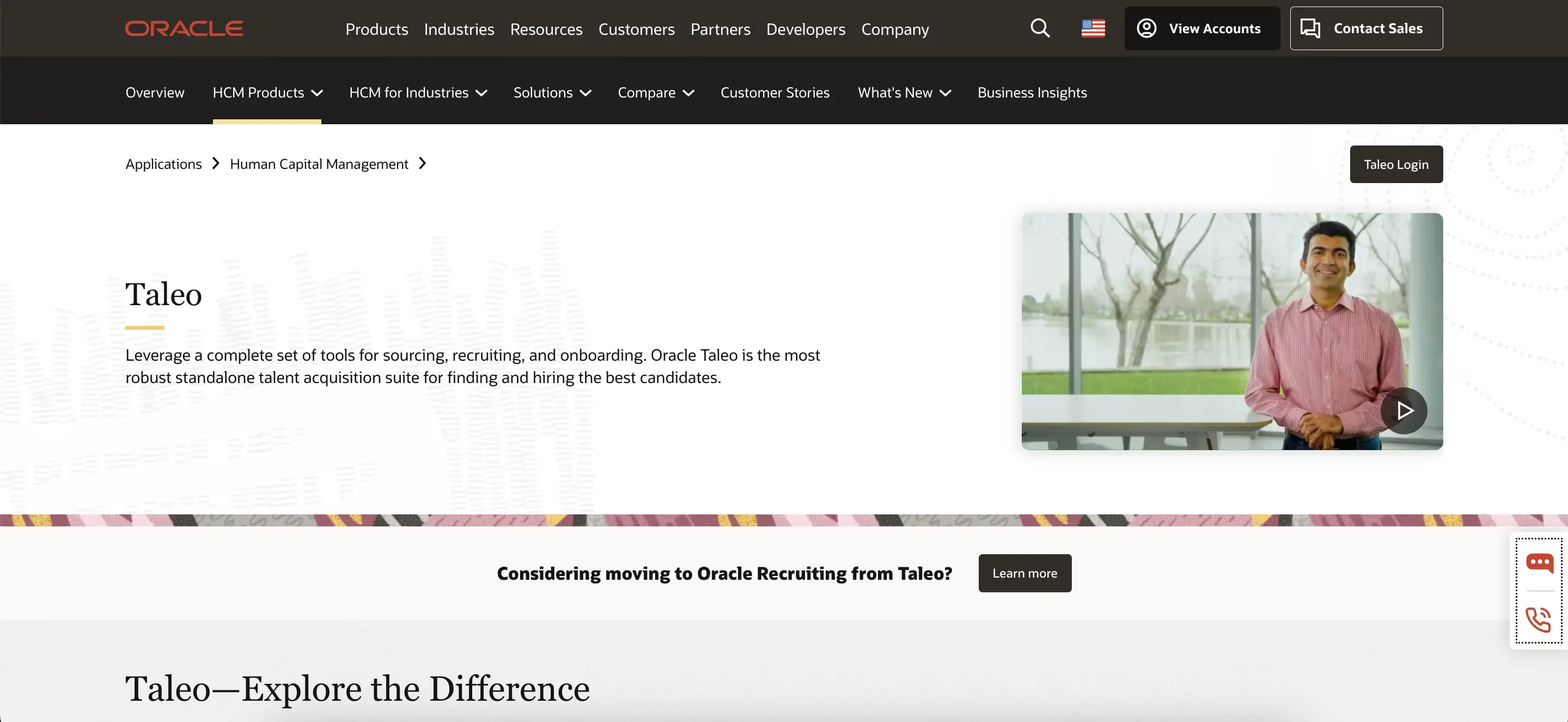
Oracle Recruiting Cloud is a cloud-based applicant tracking and candidate relationship management module integrated into Oracle Fusion Cloud HCM. It was first released in 2018 as Oracle's direct successor to the older, acquired Taleo platform.
Oracle Corporation, founded in 1977 by Larry Ellison, is now led by co-CEOs Clay Magouyrk and Mike Sicilia, who took over in September 2025. Ellison continues to serve as Executive Chairman and CTO.
The platform's primary differentiator is its native integration with Oracle's broader HCM suite. A company that already uses Oracle for core HR and payroll can access recruiting within the same data model. This eliminates the need for a separate system that requires its own synchronization.
Oracle Recruiting Cloud Features Review
Oracle Recruiting Cloud focuses on core applicant tracking, AI-assisted matching with Recruiting Booster, candidate relationship management, onboarding, and a range of AI and interface updates based on Oracle's Redwood design system. Below is my evaluation of each feature, highlighting its strengths and areas where it still has limitations:
Applicant Tracking & Requisition Management
Job requisitions, approval workflows, and candidate pipelines all connect to the same employee data model that supports core HR.
I moved a test requisition through approval and posting without needing to re-enter information already stored in the HCM system. Configurable stages allow a recruiter to track candidates through a process tailored to a specific role type instead of a rigid, one-size-fits-all pipeline.
Compliance tracking for OFCCP and EEO/AA reporting benefits from Oracle's long history in regulated, large-enterprise hiring. I found the audit trail depth to be notably thorough during testing, especially compared to lighter ATS platforms designed for smaller teams.
However, configuration takes real time to get right. Setting up requisition templates and approval chains for a complex organization is not a quick, self-service task.
Recruiting Booster & AI Matching
Recruiting Booster is Oracle's AI-assisted matching layer. It is evaluated separately in Oracle's 2026 Gartner recognition. The tool scores incoming applications against job requirements, helping recruiters prioritize who to review first.
I tested it for a role with specific technical requirements. I found the ranking reasonably aligned with what I would have chosen manually. However, the reasoning behind a given score wasn't visible in the interface.
AI-assisted job description creation now drafts a starting point based on the role and requirements. I used this during testing to generate a draft that needed light editing instead of a full rewrite.
Job fit scoring helps tailor outreach messages, making them more personal rather than generic. Recruiting Booster does not rediscover candidates from a company’s past applicants. Matching happens only with those currently in the active pipeline.
Candidate Relationship Management & Career Sites
Branded career sites connect directly to open roles. Oracle's newer conversational career site experience helps candidates discover jobs through guided prompts instead of just a static list of postings. I tested the guided application flow and noticed it significantly reduced the number of fields candidates had to fill out manually compared to a standard form.
Candidate relationship tools enable recruiters to build talent pools and launch outreach campaigns, keeping passive candidates engaged between roles.
Independent comparisons with dedicated CRM-focused platforms consistently rank Oracle's CRM depth as functional but not a leader in the category. This matches my observations when testing segmentation options, which seemed more basic than what a specialized nurture tool provides.
Onboarding & HCM Integration
A signed offer flows directly into onboarding tasks and new-hire paperwork without a separate handoff step. The same data model carries the candidate record forward into the employee record.
I walked through a mock onboarding sequence, and the transition from candidate to employee profile happened automatically. There was no need to re-enter information already captured during recruiting.
This tight integration is the module's clearest strength for a company already using Oracle HCM broadly. Payroll, benefits, and core HR all pick up the new hire's data without a manual sync. A company evaluating Oracle Recruiting purely as a standalone ATS, without the rest of Oracle HCM in place, won't get the same value from this specific advantage.
Redwood UI & Digital Assistants
Oracle's Redwood design system, set to be rolled out across Recruiting through 2026, replaces the platform's older interface with a more modern, action-driven layout.
I noticed that navigating between candidate records and requisitions took fewer clicks than I remembered from Oracle's legacy screens. Digital assistants now answer plain-language questions about a candidate's status or a requisition's progress directly within the workflow.
Some screens I tested clearly reflected the newer Redwood experience. However, others still felt like the platform's older generation. This is something to keep in mind during any current Oracle Recruiting evaluation.
Compliance & Reporting
Standard compliance reports include OFCCP, EEO, and affirmative action requirements right from the start. This is especially important for large US enterprises and federal contractors that have serious legal reporting obligations.
I found these reports to be much more comprehensive compared to lighter competitors, which reflects Oracle's long history in enterprise HR before cloud recruiting was even a thing.
For custom reporting beyond the standard compliance templates, real configuration is necessary. Companies looking for flexible, ad hoc analysis should turn to Oracle's broader HCM reporting tools instead of relying solely on something made just for recruiting. This level of detail is more beneficial for companies with dedicated HRIS or compliance staff than for smaller recruiting teams working on their own.
Oracle Recruiting Cloud Pricing Review
Oracle does not disclose pricing for Recruiting Cloud or the Fusion Cloud HCM suite. Each quote is tailored based on employee count, selected modules, and whether a company is implementing Oracle HCM anew or migrating from Taleo. To obtain an accurate figure, you must engage directly with an Oracle sales team.
Independent estimates suggest that Oracle Cloud HCM deployments, including Recruiting, often exceed six figures annually for mid-to-large enterprises. Implementation costs are separate and can take months for full migration.
Additionally, features like Recruiting Booster and some AI capabilities may incur extra charges, so a quote for just the base platform may not reflect the total cost.
Always treat these figures as estimates, as Oracle has not publicly confirmed pricing. Request a comprehensive quote covering all intended modules and a realistic migration timeline before comparing it to competitors like SAP SuccessFactors or Workday.
Oracle Recruiting Cloud Marketplace
Oracle Cloud Marketplace connects Recruiting to background check providers, assessment tools, and job board distribution partners. It also features deeper integrations with Oracle's own HCM, ERP, and financial applications for companies using the complete Oracle stack. This native breadth is the main reason a company already committed to Oracle prefers to keep recruiting within the same ecosystem rather than adopting a separate best-of-breed ATS.
For a company not already invested in Oracle, this level of integration is less significant. A dedicated recruiting platform with a broader third-party marketplace can meet the same specific needs without requiring the entire Oracle stack to deliver full value.
Oracle Recruiting Cloud Security and Compliance
Oracle Recruiting Cloud benefits from the enterprise-grade security and compliance infrastructure of the broader Oracle Cloud platform. This includes role-based access controls and audit logging for candidate and employee data.
Additionally, built-in tracking for OFCCP and EEO/AA compliance is a legacy strength that Oracle has maintained from its decades of serving large, regulated US employers.
For companies with federal contracting obligations or specific compliance needs, this depth offers a real advantage over newer, cloud-native competitors that are still developing similar reporting capabilities.
Companies with requirements beyond what is publicly documented should check specifics directly with Oracle's sales and compliance teams, as the detailed certification scope can vary by deployment and region.
Oracle Recruiting Cloud Reviews: Pros & Cons
Strengths of Oracle Recruiting Cloud
Based on my evaluation and cross-referencing verified user reviews, these are the standout pros of Oracle Recruiting Cloud:
- Deep Compliance for Regulated Enterprises: Users consistently praised Oracle's OFCCP and EEO/AA reporting depth as stronger than most cloud-native competitors. This is especially true for federal contractors.
- Genuine Native HCM Integration: Verified users specifically praise the lack of a separate sync between recruiting and core HR, payroll, and benefits once a candidate becomes an employee.
- Enterprise Scalability: Multiple teams reported the platform as capable of handling large, high-volume hiring operations reliably, once it is properly configured for the organization's scale.
- Real AI Investment Recognized Externally: Users note that Oracle's 2026 Gartner Leader recognition reflects genuine product investment. This stands in contrast to surface-level AI marketing claims.
- Improving Interface Under Redwood: Users who have used both the older and newer interface describe the Redwood rollout as a meaningful step forward in usability.
Limitations of Oracle Recruiting Cloud
The same verified user base that praises Oracle's depth of compliance and HCM integration also consistently raises concerns. Below are the cons of Oracle Recruiting Cloud:
- Configuration Requires Real Expertise: Setting up requisition templates and approval chains for a complex organization takes meaningful time, often needing dedicated Oracle consulting support to configure correctly.
- Match Scoring Lacks Full Transparency: Recruiting Booster ranks candidates against job requirements, but it doesn't show the specific reasoning behind an individual candidate's score, which is now required by the EU AI Act and many state laws in the US.
- No Talent Rediscovery of Past Applicants: Nothing automatically rediscovers a strong candidate from a closed requisition when a similar role opens again later.
- Interface Inconsistency During Rollout: Some screens still reflect Oracle's older design while others use the newer Redwood experience, creating an uneven feel across the platform today.
- CRM Depth Lags Dedicated Platforms: Candidate nurture and segmentation options feel more basic than what a purpose-built recruiting CRM offers for proactive, ongoing sourcing work.
- Value Depends on Broader Oracle Investment: The platform's key advantage is based on a company already using other Oracle HCM modules, limiting appeal for standalone ATS buyers specifically.
How Integrating Skima AI Can Handle Oracle Recruiting Cloud's Limitations
Recruiting Booster scores active applicants, but that score doesn't come with the reasoning behind it, and nothing sources a strong candidate from a past requisition when a similar role opens again.
To address these limitations, I noticed users often integrate Skima AI with Oracle Recruiting Cloud. Here is what the integration provides:
- Job Description Compliance Check: Before a requisition goes live, Skima AI flags language that may indicate gender or age bias. It audits inflated requirements that could indirectly exclude protected groups. It also confirms that a compensation range is included where local law requires it. This approach catches potential issues at the source, rather than after applications start arriving.
- AI Candidate Screening for New Applicants: As candidates apply for a job synced from Oracle, Skima AI automatically screens and ranks each resume against the role's actual requirements. This adds transparent depth to Recruiting Booster's existing scoring.
- Talent Rediscovery for Past Candidates: Skima AI scans a company's existing Oracle database for candidates who were previously screened but not hired. It surfaces qualified matches for a new opening without requiring a recruiter to start a fresh search from scratch.
- Explainable Match Scoring Behind Both: Every score comes with reasons based on specific skills, years of experience, and certifications, rather than a ranking with limited visibility into how it was reached.
Who Is Oracle Recruiting Cloud Best For?
Oracle Recruiting Cloud is best for large enterprises already using or migrating to Oracle Fusion Cloud HCM. It's a strong choice for organizations that need recruiting integrated with their core HR system.
If you require extensive compliance reporting or are transitioning from Taleo, this solution fits well. Additionally, it is ideal for those with significant hiring volumes and organisational complexities that justify upfront configuration investments.
Who Should Avoid Oracle Recruiting Cloud?
Avoid Oracle Recruiting Cloud if you’re not using Oracle Cloud HCM and don’t plan to adopt it. If you want top-tier CRM and candidate nurturing, prefer clear, predictable pricing, desire transparent AI match scoring, or need automatic rediscovery of candidates from your entire database, this platform may not meet your needs.
Final Verdict: Should You Buy Oracle Recruiting Cloud?
I'd recommend Oracle Recruiting Cloud for large enterprises using Oracle Fusion Cloud HCM, especially regulated organizations needing OFCCP and EEO/AA compliance. Its rollout of the Redwood interface indicates a serious investment in innovation.
However, if a team requires a standalone, best-in-class ATS or prioritizes transparent AI scoring and automatic candidate rediscovery, they should consider alternatives. For those who want scoring transparency and compliance checks now, integrating Skima AI with Oracle Recruiting Cloud is a more practical solution.
Frequently Asked Questions
1. What is Oracle Taleo?
Oracle Taleo is an enterprise talent-acquisition suite by Oracle that provides applicant tracking, job distribution, onboarding, compliance reporting, and integrations for large-scale global recruiting programs.
2. How much does Oracle Taleo cost?
Oracle Taleo pricing is usually negotiated. Legacy subscriptions depend on the contract, services, and region. New buyers are directed to Oracle Fusion Cloud HCM. They need to contact Oracle Sales for a customized quote.
3. Can small businesses use Oracle Taleo?
Small businesses generally find Taleo overly complex and costly; it’s optimized for large enterprises. Startups and small teams should evaluate lightweight, user-friendly ATS alternatives or Oracle Fusion recruiting for fit and cost.
4. How does Oracle Taleo handle compliance and reporting?
Oracle Taleo offers robust compliance controls, EEO/OFCCP reporting, audit trails, and configurable workflows. It supports multi-jurisdictional regulations and provides exportable reports for audits and HR analytics across global operations.
5. Can Oracle Taleo integrate with Skima AI?
Yes, Taleo can integrate with AI layers like Skima AI via APIs or integration platforms. Skima AI improves screening, provides explainable match scores, and surfaces internal candidates while preserving Taleo audit trails.