










Create Jobs with Built-In Bias Detection
Build structured scoring rubrics from your JD and screen candidates against hiring compliance standards built into the job creation flow
4 min read
- The rebuilt job creation flow generates a structured scoring rubric from your JD that you review and approve before any candidate is scored.
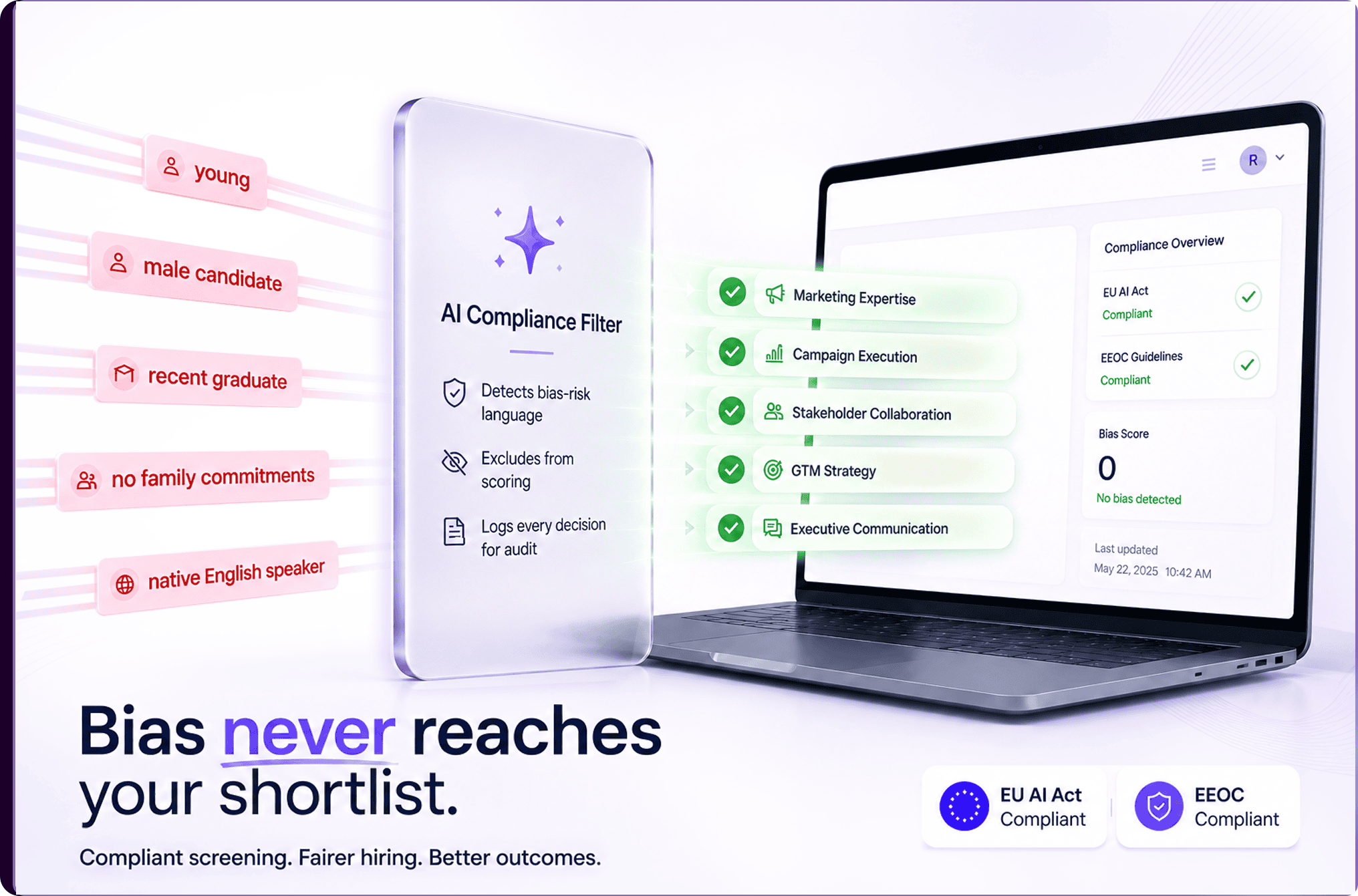
- Skima AI automatically detects bias-risk language in job descriptions and excludes it from scoring by default, keeping your hiring process compliant with EEOC and the EU AI Act.
- Every compliance decision, whether excluded, overridden, or approved, is permanently logged in an audit trail against your account.
- Refer to the Create Job and AI Calibration docs linked below for the complete workflow walkthrough.
A Smarter Way to Set Up Jobs
Creating a job in Skima AI now follows a structured three-step flow that takes your job description and turns it into a scoring rubric before a single candidate is evaluated. The process is straightforward:
Bring in your JD by pasting it, uploading a file, or generating one with AI
Confirm role details like experience, location, and sourcing eligibility
Review the generated scoring rubric and publish it when ready
Once published, every candidate is scored against this rubric automatically. No manual configuration, no guesswork.
Compliance that works quietly in the background
As part of the same flow, Skima reviews your JD for language that could create hiring risk under EEOC guidelines or the EU AI Act. Things like age references, location proxies, or culture-fit language that might unintentionally narrow your candidate pool. Anything flagged is excluded from scoring by default so your rubric stays clean without extra effort on your part.
If you believe a flagged criterion is genuinely relevant for the role, you can include it with a written justification. Every decision, whether excluded or included, is logged automatically so your hiring process stays auditable without any additional steps.
Screening That Holds Up
For most hiring teams, compliance in screening has meant manual review after the fact or hoping the JD was clean enough. This update moves compliance to the start of the workflow, where it can prevent problems rather than flag them later.
Recruiters get a structured way to define what they are hiring for
Hiring managers get a rubric they can review and approve
Compliance teams get an audit log of every decision made during job setup
Every candidate is evaluated against criteria already reviewed for bias risk
For teams operating across multiple jurisdictions, this means hiring workflows that are defensible by design rather than by documentation after the fact. For companies hiring in the United States, the built-in compliance layer directly supports EEOC obligations by keeping protected attribute language out of scoring criteria from the start. For teams subject to EU AI Act requirements, the audit log and override controls provide the transparency and accountability the regulation requires.