















Hide Kanban Stages
Hide Kanban stages and protect from bulk actions
4 min read
- Hide irrelevant Kanban stages to focus only on active hiring steps without clutter from completed or inactive stages.
- Automatically exclude hidden stage candidates from bulk actions to prevent unintended status updates or stage movements.
- Use stage visibility as a control layer for safer bulk operations during high-volume hiring workflows.
- Improve pipeline clarity and reduce errors by limiting actions to only visible, in-scope candidates.
Clean Up Stages
Skima AI now lets recruiters hide unwanted stages in the Kanban view on the Jobs page. When a stage is hidden, all candidates inside that stage are automatically excluded from bulk actions. This keeps the board focused on the active hiring flow while reducing the risk of accidentally updating candidates who are not part of the current workflow.
Hide with Control
1. Go to https://app.skima.ai/jobs
2. Select and open any job in Kanban view
3. Select any stage to Hide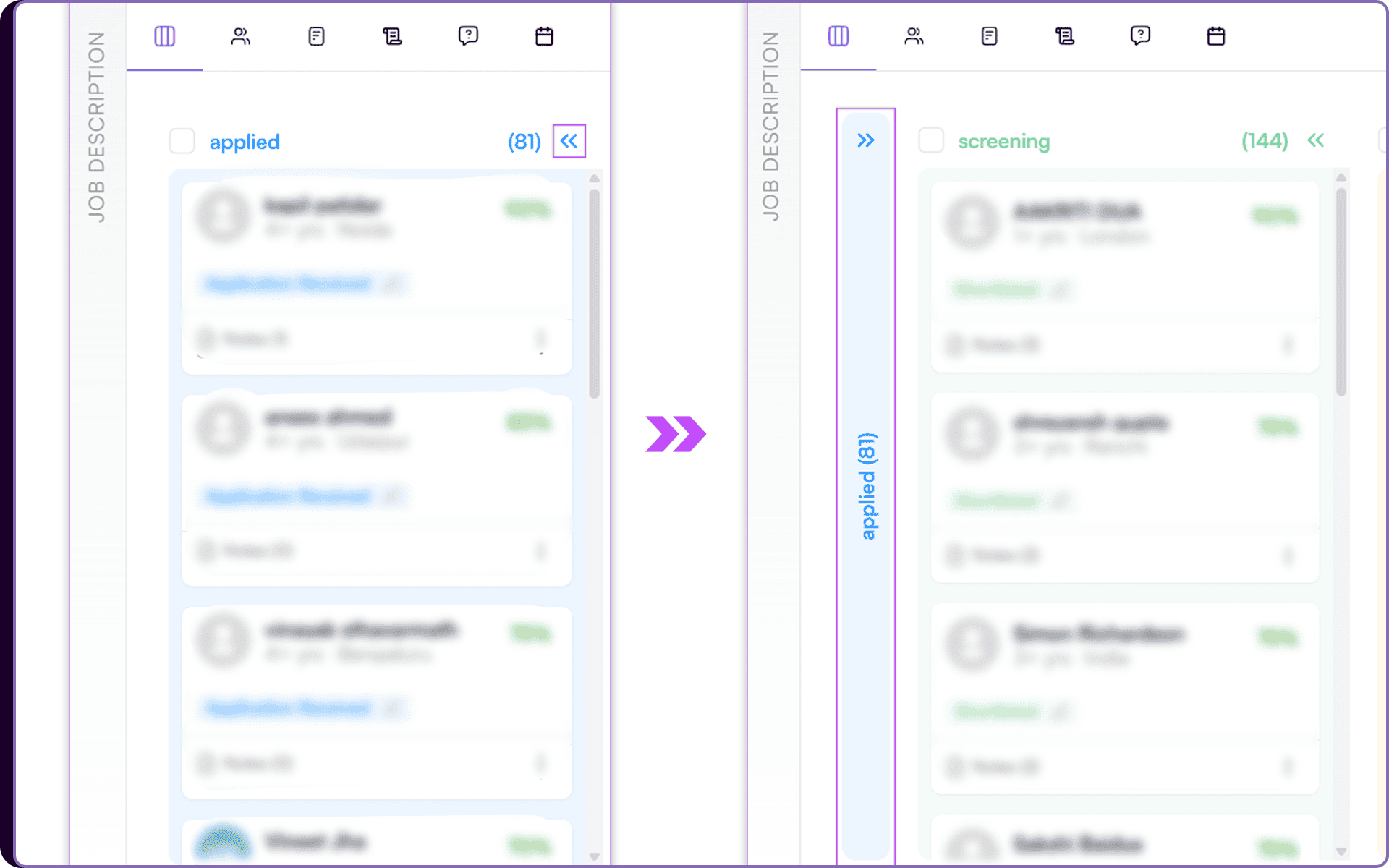 4. Use the hide and show control icon (<<) in the stage header
5. The selected stage will disappear from the board
6. The remaining candidates are ready for 'Bulk Actions'.
Bulk Only Visible
When a recruiter hides a stage, that column is removed from the visible Kanban board so the workflow stays focused only on the stages that matter right now. More importantly, candidates inside those hidden stages are automatically removed from bulk actions, including stage moves and status updates.
This makes the board much safer to work with during high volume hiring. For example, if a recruiter only wants to move 'active interview candidates' forward, they can hide rejected or on hold stages first, then confidently use bulk actions knowing those candidates will not be touched.
Prevent Bulk Mistakes
This update makes Kanban workflows cleaner and much safer at scale. Recruiters can reduce board clutter by hiding inactive or completed stages while ensuring bulk actions only apply to the candidates they actually want to manage.
The result is faster pipeline cleanup, more accurate mass updates, and far better confidence when working with large candidate volumes across multiple stages.